
Quick answer
What Is Silent Myocardial Ischemia?
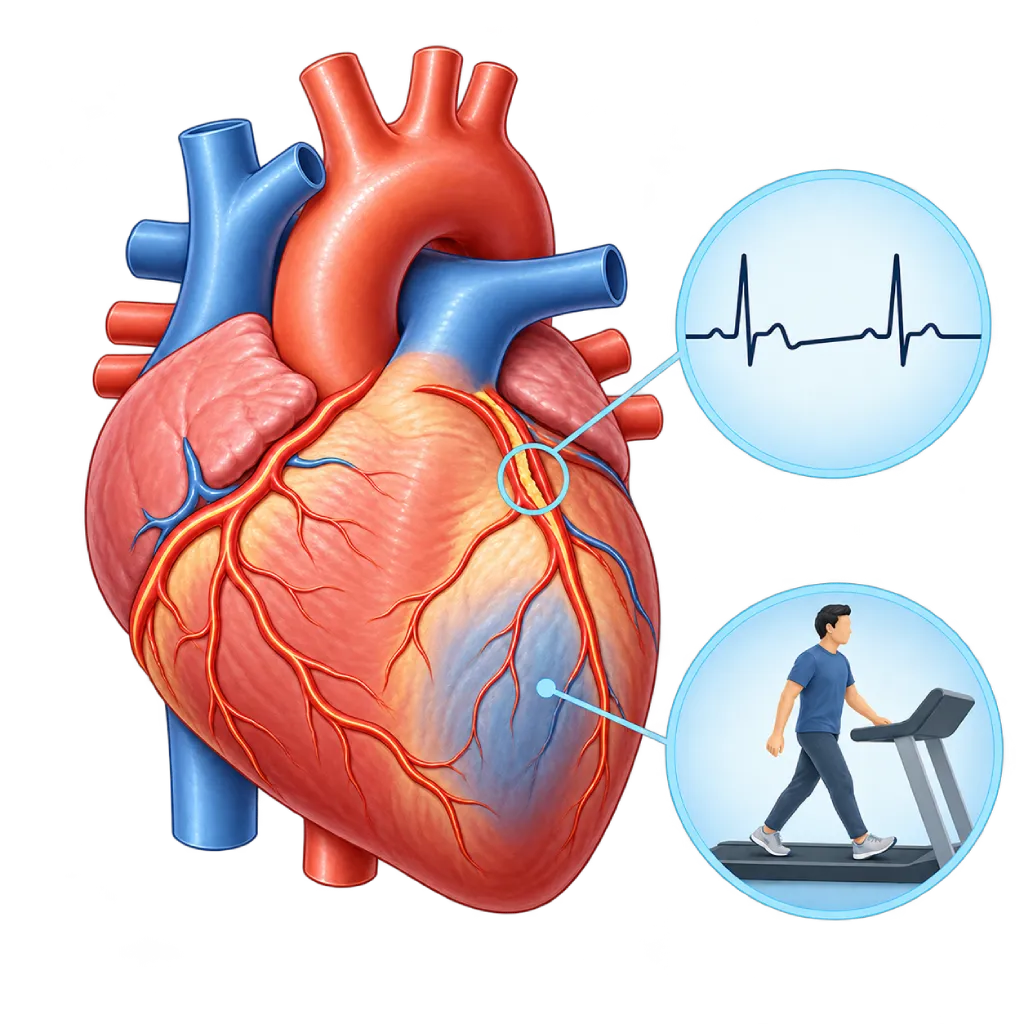
Silent myocardial ischemia is a condition in which the heart muscle does not get enough blood flow, yet no chest pain occurs. It is usually found through an ECG or heart tests, and its risk is comparable to that of ischemia you can feel.
SourcesSigns That Need Urgent Help
- Chest pain or pressure lasting more than 5 minutes
- Severe shortness of breath that comes on suddenly
- Cold sweat with severe weakness or nausea
- Fainting or nearly fainting
- A very fast or very irregular heartbeat with weakness
If these signs appear, go to the nearest emergency department right away or call Heart Attack Center 1500 258.
01 / Understanding the condition
About Silent Myocardial Ischemia
Myocardial ischemia means the heart muscle (myocardium) is not getting enough oxygen-rich blood. Usually this causes pain or a feeling of pressure in the chest called angina. In silent myocardial ischemia, the reduced blood flow is proven by tests, for example changes on an ECG recording or weakened heart wall motion during an exercise test, but the person feels nothing.
Why It Is Not Felt
The cause of the reduced blood flow is the same as in coronary artery disease in general: narrowing of the coronary arteries by plaque, problems in the small blood vessels, or spasm of the arteries. What differs is the pain signal. Long-standing diabetes can damage the nerves that carry pain sensations from the heart. The pain threshold also tends to be higher in older age. After a heart attack or bypass surgery, some of the heart's nerves are also damaged or cut. Brief or mild episodes of ischemia are often not enough to cause pain either.
Three Patterns Doctors Recognize
Some people never feel any symptoms at all, some develop it only after having had a heart attack, and some people with angina have episodes of painless ischemia in addition to painful episodes. This last pattern is fairly common: in some people with angina, a 24-hour ECG recording shows more episodes of painless ischemia than episodes they can feel.
Different from Silent Infarction
Ischemia means the heart muscle lacks blood temporarily and has not died. If the shortage lasts long enough for part of the muscle to be damaged without the person noticing, the condition is called silent infarction, covered on the Silent Myocardial Infarction page.
Why It Still Needs Treatment
Studies show that ischemia you cannot feel carries a risk of heart attack and rhythm disturbances similar to ischemia you can feel. Its treatment is also the same as for coronary artery disease, covered on the Coronary Artery Disease page: controlling risk factors, heart-protective medicines, and opening the arteries when needed. Because there is no pain to act as an alarm, regular checkups and attention to changes in your ability to be active take the place of that alarm.
02 / Understanding the condition
Symptoms to Recognize.
Common Symptoms
Most people with this condition feel no symptoms. When symptoms do occur, they are vague and easily mistaken for ordinary tiredness.
- No chest pain at all
- Tiring quickly or getting short of breath during activities that used to feel easy
- A gradual decline in your ability to walk long distances or climb stairs
- Vague discomfort in the upper middle abdomen during activity
- Sweating or palpitations out of proportion to the activity
Symptoms in Older Adults
In older age, and also in people who have had diabetes for a long time, reduced blood flow to the heart more often goes without pain.
- Mild shortness of breath during activity with no other symptoms
- Weakness or tiredness that becomes more frequent without a clear cause
- Dizziness or feeling faint during activity
- No symptoms, but ECG changes are found during a routine checkup
03 / Understanding the condition
What Causes This Condition?
- Narrowing of the coronary arteries by fatty plaque, as in coronary artery disease with symptoms
- Problems in the very small blood vessels of the heart muscle that cannot widen when the heart works hard
- Brief spasm of a coronary artery
- Nerve damage from long-standing diabetes, which weakens pain signals from the heart
- Heart nerves damaged or cut after a heart attack or bypass surgery
- Increased oxygen demand of the heart, for example with very high blood pressure or a very fast heart rate
04 / Understanding the condition
Who Is at Higher Risk?
Medical
Diabetes, especially long-standing diabetes or diabetes with nerve damage, a history of heart attack or bypass surgery, hypertension, high LDL cholesterol, and chronic kidney disease.
Lifestyle
Smoking, physical inactivity, a diet high in saturated fat and salt, and excess body weight speed up narrowing of the coronary arteries.
Age
The risk rises with age, and in older age ischemia more often causes no pain.
Genetic
Early coronary artery disease in your immediate family and inherited high cholesterol increase the likelihood of plaque in the coronary arteries.
Groups at Higher Risk
- People with Diabetes: Nerve damage from diabetes can take away the sensation of pain from the heart, so ischemia more often goes unfelt.
- Heart Attack Survivors: After a heart attack, some later episodes of ischemia no longer cause the same pain.
- Patients After Coronary Bypass Surgery: Bypass surgery can cut some of the heart's nerves, so new narrowing in the grafts or other arteries may not be felt.
- Older Adults: A higher pain threshold and coexisting illnesses make ischemia in older age more often vague or unfelt.
- People with Chronic Kidney Disease: Chronic kidney disease speeds up hardening of the arteries and often occurs together with diabetes, so ischemia easily goes unnoticed.
05 / Understanding the condition
How Is It Diagnosed?
Because there are no symptoms, silent myocardial ischemia is almost always found through tests. Some cases are found by chance, for example from an ECG during a health checkup or before surgery. Others are found when a doctor examines someone already known to have coronary artery disease or someone at high risk.
If there is a suspicious finding, the doctor confirms it with a stress test, such as a treadmill test, stress echocardiography, or myocardial perfusion imaging. These tests show whether any part of the heart muscle lacks blood when the heart works hard, and how large that area is. A 24-hour ECG recording can capture episodes of ischemia during daily activities. CT coronary angiography or catheter angiography shows the location and severity of the narrowing.
The 2023 ESC guidelines on diabetes do not recommend routine ischemia testing for all people with diabetes who have no symptoms, because the DIAD study found no benefit for cardiac events. Tests are chosen according to each person's level of risk.
Electrocardiogram (ECG)
A resting ECG can show signs of ischemia or of a previous heart attack, but it is often normal when ischemia is not occurring at that moment.
Treadmill Stress Test
Records the ECG, blood pressure, and exercise capacity while you walk on a treadmill to look for changes that appear when the heart works hard.
Holter Monitoring
Records the ECG for 24 to 48 hours during daily activities to capture episodes of ischemia that you do not feel.
Stress Echocardiography
Assesses heart wall motion during stress from exercise or medication; areas that weaken show muscle that lacks blood.
Myocardial Perfusion Imaging
Imaging with a tracer to assess the extent and location of heart muscle with reduced blood flow.
CT Coronary Angiography
Shows plaque and narrowing in the coronary arteries without a catheter when functional tests are unclear or an anatomical picture is needed.
Coronary Angiography
Takes images of the coronary arteries using a catheter when tests show extensive ischemia or high risk, and at the same time determines whether a procedure is needed.
06 / Understanding the condition
Treatment Options.
Treatment is decided by a doctor after an assessment. The categories below can help you follow the conversation with your doctor.
Risk Factor Control
Quitting smoking, staying active, eating a healthy diet, and keeping blood pressure, LDL cholesterol, and blood sugar under control to the targets set by your doctor.
Medicines to Prevent Cardiac Events
Antiplatelets and statins are given when ischemia is caused by coronary artery disease, to lower the risk of heart attack. Your doctor decides which type.
Anti-Ischemic Medicines
Beta blockers, calcium channel blockers, or long-acting nitrates can reduce episodes of ischemia, both those you can feel and those you cannot.
Diabetes Control
Well-controlled blood sugar protects the blood vessels and nerves. Certain medicines in the SGLT2 or GLP-1 classes also protect the heart in people with diabetes.
Opening the Coronary Arteries
Stent placement or bypass surgery is considered when ischemia is extensive, the narrowing is in the left main coronary artery or in several arteries, or the heart's pumping is weakened.
Cardiac Rehabilitation
Supervised exercise helps determine a safe amount of activity, especially because pain cannot be used as a limit for exercise.
07 / Understanding the condition
Complications to Watch For.
Heart Attack
Plaque that causes ischemia can crack and become covered by a clot, blocking the artery and damaging part of the heart muscle. Covered on the Myocardial Infarction / Heart Attack page.
Heart Rhythm Disorders
Heart muscle that repeatedly lacks blood can trigger irregular rhythms, including dangerous ventricular rhythms.
Weakening of the Heart's Pump
Repeated ischemia and small, unnoticed infarctions can weaken the heart's pumping until heart failure develops.
Sudden Cardiac Arrest
In a small number of people, a chaotic ventricular rhythm is the first sign of coronary artery disease that had not been felt before.
08 / Understanding the condition
What Can You Do?
- Quit smoking and avoid other people's cigarette smoke.
- Control your blood sugar, blood pressure, and cholesterol according to the targets set by your doctor.
- Stay physically active on a regular basis as advised by your doctor, for example with brisk walking.
- Choose a diet rich in vegetables, fruit, whole grains, and fish; limit salt and saturated fat.
- Pay attention to any decline in your ability to be active and tell your doctor, even if you have no chest pain.
- If you have had a heart attack or bypass surgery, keep your scheduled checkups even if you feel well.
09 / Understanding the condition
When Should You See a Doctor?
Because this condition causes no pain, do not wait for symptoms before seeing a doctor. If you ever develop chest pain lasting more than 5 minutes, severe shortness of breath, cold sweat, or fainting, go to the nearest emergency room right away or call an ambulance (119).
Make an appointment with a cardiologist if:
- The ECG from your health checkup shows an abnormality described as a sign of ischemia.
- Your ability to walk or climb stairs declines without a clear cause, even without chest pain.
- You have long-standing diabetes, chronic kidney disease, or several risk factors at once and have never had your heart risk assessed.
- You have had a heart attack, a stent, or bypass surgery and are due for a checkup.
Don't Wait in an Emergency.
If symptoms are severe or come on suddenly, go to the nearest emergency department right away or call Heart Attack Center 1500 258, rather than waiting for an appointment.
10 / Common questions
Questions You May Have.
Frequently asked questions about silent myocardial ischemia.
How can the heart lack blood without you feeling it?
Pain from the heart is carried by nerves. In long-standing diabetes, these nerves can be damaged so that the pain signal weakens. The pain threshold also tends to rise with age, and some of the heart's nerves can be damaged after a heart attack or bypass surgery. In addition, brief or mild episodes of ischemia are often not strong enough to cause pain, even though they are clearly visible on tests.
How is it different from silent myocardial infarction?
In silent ischemia, the heart muscle lacks blood temporarily but has not died, and it usually recovers when the workload on the heart decreases. In silent infarction, part of the muscle has already been damaged and replaced by scar tissue, even though the event went unnoticed. Infarction is found on an ECG or imaging that shows the old damage. Both need the same treatment for coronary artery disease, and both should be assessed by a cardiologist.
Is silent ischemia milder than angina?
No. The absence of pain does not mean the narrowing is milder. Studies show that ischemia you cannot feel carries a risk of heart attack and rhythm disturbances similar to ischemia that causes angina. The difference is that you have no pain to act as an alarm, so you tend to get checked later. That is why doctors judge the severity of the condition from test results, not from whether symptoms are present.
Do all people with diabetes need an ischemia test?
Not as a routine test. The DIAD study in people with type 2 diabetes without symptoms showed that screening everyone for ischemia did not reduce heart attacks. The 2023 ESC guidelines place more emphasis on controlling risk factors in all people with diabetes. An ischemia test is considered when there are symptoms, including shortness of breath or a decline in your ability to be active, ECG abnormalities, or very high risk.
How can this condition be monitored when there are no symptoms to act as a warning?
Regular checkups take the place of the pain alarm. Your doctor monitors your blood pressure, LDL cholesterol, blood sugar, and how consistently you take your medicines, and may repeat a stress test if anything changes. Keep track of your activity capacity, for example how many flights of stairs you can climb without stopping. A decline in this capacity, new shortness of breath, or unusual tiredness should be reported to your doctor even if you have no chest pain.
Does silent ischemia have to be treated with a stent?
Not always. The ISCHEMIA study (2020), which also included participants without symptoms, showed that in stable coronary disease, opening the arteries early did not reduce the overall risk of heart attack or death compared with well-managed medical treatment. A stent or bypass is considered when ischemia is extensive, the narrowing is in a high-risk location, or the heart's pumping is weakened. The decision is made together with your cardiologist.
Sources and Medical Review
Translated from the Indonesian edition medically reviewed by Dr. dr. Jajang Sinardja, Sp.JP(K).
Sources as cited in the Indonesian edition.
- Vrints C, Andreotti F, Koskinas KC, Rossello X, Adamo M, Ainslie J, et al. 2024 ESC Guidelines for the management of chronic coronary syndromes. Eur Heart J. 2024;45(36):3415-537.
- Cohn PF, Fox KM, Daly C. Silent Myocardial Ischemia. Circulation. 2003;108(10):1263-77.
- Marx N, Federici M, Schutt K, Muller-Wieland D, Ajjan RA, Antunes MJ, et al. 2023 ESC Guidelines for the management of cardiovascular disease in patients with diabetes. Eur Heart J. 2023;44(39):4043-140.
- Young LH, Wackers FJT, Chyun DA, Davey JA, Barrett EJ, Taillefer R, et al. Cardiac Outcomes After Screening for Asymptomatic Coronary Artery Disease in Patients With Type 2 Diabetes: The DIAD Study: A Randomized Controlled Trial. JAMA. 2009;301(15):1547-55.
- Maron DJ, Hochman JS, Reynolds HR, Bangalore S, O'Brien SM, Boden WE, et al. Initial Invasive or Conservative Strategy for Stable Coronary Disease. N Engl J Med. 2020;382(15):1395-407.
- Virani SS, Newby LK, Arnold SV, Bittner V, Brewer LC, Demeter SH, et al. 2023 AHA/ACC/ACCP/ASPC/NLA/PCNA Guideline for the Management of Patients With Chronic Coronary Disease: A Report of the American Heart Association/American College of Cardiology Joint Committee on Clinical Practice Guidelines. Circulation. 2023;148(9):e9-119.
Doctors Who Treat This Condition

Dr. med. dr. Denio A. Ridjab, Sp.JP(K)
Interventional Cardiology
Coronary Intervention Procedures +2 centers
Clinical focusInterventional Cardiology · Coronary Artery Disease
View Profile
Dr. dr. Jajang Sinardja, Sp.JP(K)
Interventional Cardiology
Coronary Intervention Procedures
Clinical focusAcute Coronary Syndrome · Primary Coronary Intervention
View Profile
dr. Debby C. Soemitha, Sp.PD
Internal Medicine
Clinical focusDiabetes and Diabetes Complications · Obesity and Metabolic Disease
View Profile