
Quick answer
What Is Chest Pain?
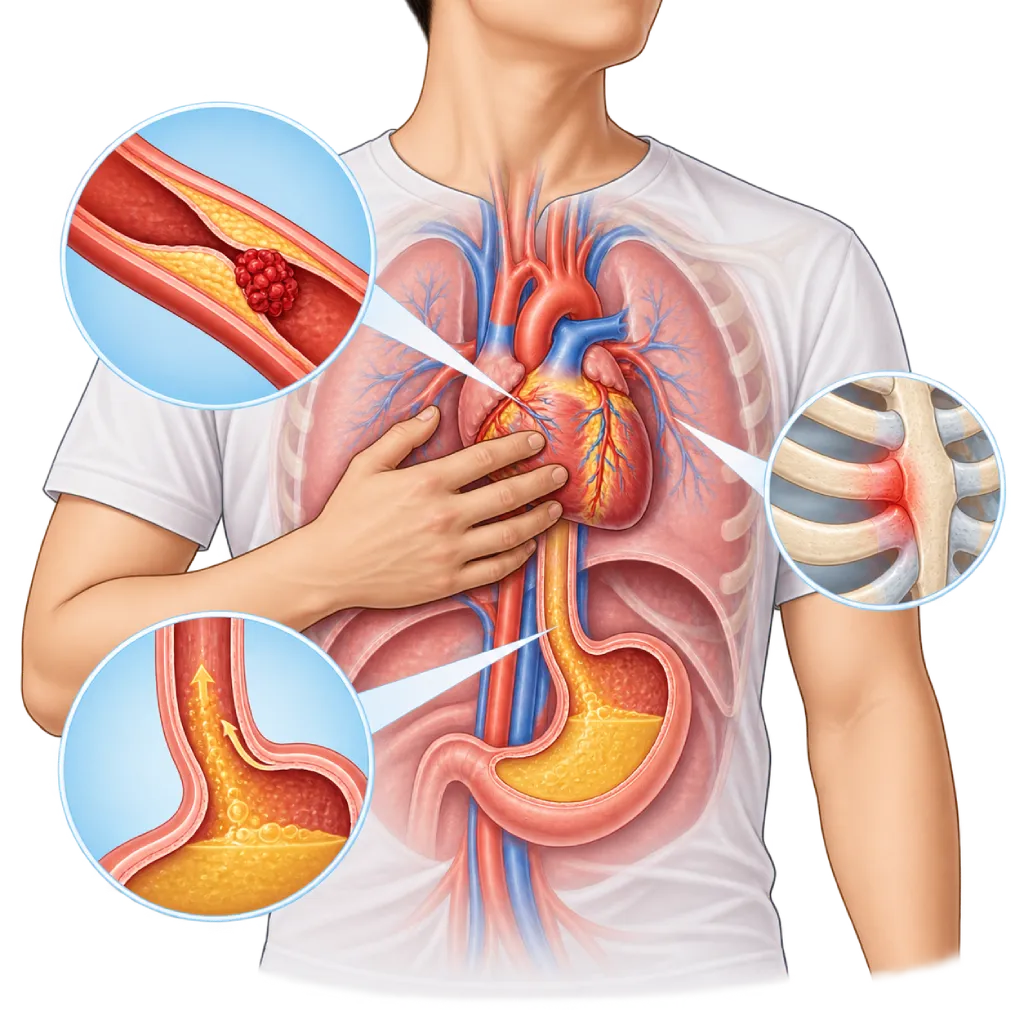
Chest pain is pain, pressure, heaviness, or discomfort in the chest that can come from the heart, lungs, blood vessels, stomach, muscles, or anxiety. Chest pain that comes on suddenly needs to be checked in the emergency room right away.
SourcesSigns That Need Urgent Help
- Pain, pressure, or heaviness in the chest that lasts more than 5 minutes or does not ease with rest
- Chest pain with cold sweats, nausea, vomiting, or shortness of breath
- Sudden, severe, tearing chest pain that goes through to the back
- Chest pain with sudden shortness of breath, especially after a long period of not moving
- Fainting, nearly fainting, or a very fast, pounding heartbeat
- Familiar chest pain that now comes more often, feels worse, or appears at rest
If these signs appear, go to the nearest emergency department right away or call Heart Attack Center 1500 258.
01 / Understanding the condition
About Chest Pain
Chest pain is a symptom, not a diagnosis. It can feel like pain, pressure, a crushing heaviness, tightness, burning, or stabbing. Discomfort in the shoulder, arm, neck, jaw, back, or upper abdomen can also come from the heart, as can shortness of breath or extreme tiredness without pain. This page helps you recognize possible causes and warning signs; it is not meant for working out the cause on your own.
Heart and Blood Vessel Causes
The causes that need to be ruled out first are the life-threatening ones: a heart attack, a tear in the wall of the aorta, and a blood clot blocking a blood vessel in the lungs. Heart attacks are covered on the Myocardial Infarction / Heart Attack page. Chest pain that appears with physical activity or stress and eases with rest can signal narrowing of the coronary arteries, covered on the Angina Pectoris page. Other heart causes include inflammation of the sac around the heart (pericarditis), inflammation of the heart muscle (myocarditis), narrowing of the aortic valve, and hypertrophic cardiomyopathy.
Causes Outside the Heart
Much chest pain comes from outside the heart. Stomach acid rising into the esophagus causes a burning feeling behind the breastbone, often after eating or when lying down. Pain from the muscles and rib joints is usually sharp, felt in one spot, and gets worse when pressed or when the body moves. Pneumonia, inflammation of the lining of the lungs, and a collapsed lung cause pain that gets worse when you breathe in. A panic attack can cause chest pain, a pounding heartbeat, and shortness of breath that feel very real. Shingles (herpes zoster) can start with pain on one side of the chest before the rash appears.
Why You Cannot Tell on Your Own
The character of the pain alone is not enough to pin down its source. Pain that is sharp or feels like indigestion sometimes still comes from the heart, especially in women, older adults, and people with diabetes, who often have symptoms that differ from the classic picture. That is why new chest pain, pain that is different from usual, or pain with warning signs needs to be checked with an ECG and blood tests. For chest pain that comes and goes over several weeks, your doctor chooses tests based on the likely cause and your level of risk.
02 / Understanding the condition
Symptoms to Recognize.
Common Symptoms
- Pressure, heaviness, or a squeezing feeling in the center of the chest
- Pain that spreads to the arm, shoulder, neck, jaw, or back
- A burning feeling behind the breastbone or in the upper abdomen
- Sharp pain that gets worse when you breathe in or move
- Pain in one spot that gets worse when pressed
- Pain that comes on with physical activity and eases with rest
- Shortness of breath, nausea, or cold sweats along with the pain
Symptoms in Adult Women
Chest pain is still the main symptom for most women, but accompanying symptoms are more common, so a heart cause is sometimes recognized late.
- Chest pain or pressure, often with nausea or shortness of breath
- Unusual, extreme tiredness
- Pain in the upper back, neck, or jaw
- Discomfort in the upper abdomen that is mistaken for indigestion
Symptoms in Older Adults
In older adults and people with diabetes, heart problems can appear without typical chest pain.
- Sudden shortness of breath or fatigue without clear chest pain
- Vague pain in the chest or upper abdomen
- Confusion, weakness, or fainting
03 / Understanding the condition
What Causes This Condition?
- Reduced blood flow to the heart muscle: a heart attack, unstable angina, or stable angina
- A tear in the wall of the aorta (aortic dissection) or a blood clot blocking the lungs (pulmonary embolism)
- Inflammation of the sac around the heart (pericarditis) or of the heart muscle (myocarditis)
- Narrowing of the aortic valve, hypertrophic cardiomyopathy, or spasm of the coronary arteries
- Stomach acid rising into the esophagus, esophageal spasm, or a stomach ulcer
- Pain in the muscles and rib joints, for example after hard coughing, lifting heavy loads, or an injury
- Pneumonia, inflammation of the lining of the lungs, or a collapsed lung (pneumothorax)
- Panic attacks or anxiety, as well as shingles before the rash appears
04 / Understanding the condition
Who Is at Higher Risk?
Lifestyle
Smoking, lack of physical activity, a diet high in salt and saturated fat, and excess body weight increase the chance that chest pain comes from coronary artery disease.
Medical
High blood pressure, diabetes, high cholesterol, chronic kidney disease, and a history of heart disease or stroke mean chest pain should be taken more seriously.
Genetic
A history of early coronary artery disease in your immediate family, meaning in a man before age 55 or a woman before age 65.
Age
The chance of a heart cause rises with age, especially in men over 45 and in women after menopause.
Other
Long periods of not moving, recent surgery, cancer, pregnancy, and birth control pills increase the risk of a blood clot in the lungs; severe high blood pressure and connective tissue disorders increase the risk of an aortic tear.
Groups at Higher Risk
- People with Diabetes: Heart symptoms can be vague or come without typical pain, so even mild chest pain or shortness of breath still needs to be checked.
- Women: More often have accompanying symptoms such as nausea and shortness of breath, and are at risk of late recognition if their symptoms are dismissed as indigestion or anxiety.
- Older Adults: Pain may be atypical and more often comes with shortness of breath, confusion, or weakness, while heart causes are found more often.
- People with Heart Risk Factors: Smokers, people with high blood pressure or high cholesterol, and people with a family history of early coronary artery disease.
- People with Coronary Artery Disease: People who have had a heart attack or a stent placed need to recognize changes in their pain pattern and know when to go to the emergency room.
05 / Understanding the condition
How Is It Diagnosed?
For sudden chest pain, the evaluation takes place in the emergency room. An ECG is recorded within about 10 minutes of arrival to look for signs of a heart attack, and then a troponin test, a marker of heart muscle damage, is done and usually repeated after a few hours. The doctor asks about the type, location, duration, and triggers of the pain, any accompanying symptoms, and your risk factors, then checks the blood pressure in both arms, your pulse, heart, and lungs. If an aortic tear or a clot in the lungs is suspected, the doctor may order a D-dimer test or a CT scan with contrast.
Once a heart attack and other emergency causes have been ruled out, or if the chest pain comes and goes, testing can continue in a planned way. Options include CT coronary angiography to look for plaque and narrowing, or a cardiac stress test such as stress echocardiography or perfusion imaging to assess blood flow when the heart works harder. Echocardiography assesses the heart's pumping and valves. If no heart cause is found, the doctor looks for causes in the stomach, lungs, or muscles and bones.
Electrocardiogram (ECG)
Done as soon as possible, ideally within 10 minutes of arriving at the emergency room, to look for signs of a heart attack, rhythm problems, or inflammation of the sac around the heart.
Cardiac Troponin Test
A high-sensitivity troponin test, usually repeated after 1 to 3 hours, to confirm or rule out heart muscle damage.
Physical Examination
Checking blood pressure in both arms, pulse, heart and lung sounds, and tender spots on the chest wall.
Chest X-Ray
A chest X-ray to look for a collapsed lung, pneumonia, fluid, or a widened shadow of the aorta and heart.
CT Coronary Angiography
An option for stable chest pain or after a heart attack has been ruled out, to see plaque and narrowing in the coronary arteries without a catheter.
Stress Echocardiography
A stress test to assess whether blood flow to the heart muscle drops when the heart works harder.
Echocardiography
An ultrasound of the heart to assess wall motion, pumping strength, the valves, and fluid in the sac around the heart.
06 / Understanding the condition
Treatment Options.
Treatment is decided by a doctor after an assessment. The categories below can help you follow the conversation with your doctor.
Emergency Treatment for a Heart Attack
Antiplatelet drugs and blood thinners, followed by a procedure through a catheter to open the blocked coronary artery as quickly as possible, or clot-dissolving medicine if catheterization cannot be done promptly.
Treatment of Other Emergency Causes
An aortic tear is treated by controlling blood pressure and with surgery or placement of a stent graft. A clot in the lungs is treated with blood thinners and, in severe cases, with a clot-dissolving treatment.
Treatment for Angina and Coronary Artery Disease
Medicines that protect the blood vessels and relieve angina, control of risk factors, and stent placement or bypass surgery when needed. Covered on the Coronary Artery Disease page.
Treatment for Acid Reflux
Acid-reducing medicine as recommended by your doctor, eating smaller portions, not lying down right after eating, and losing weight if you are overweight.
Treatment for Muscle and Bone Pain
Rest, compresses, and pain relievers that your doctor considers safe for you. Chest wall pain usually improves within a few days to weeks.
Treatment for Anxiety and Panic Attacks
Once heart causes have been ruled out, counseling, cognitive behavioral therapy, and breathing exercises can help. Your doctor may refer you to a psychologist or psychiatrist.
07 / Understanding the condition
Complications to Watch For.
Heart Muscle Damage
If chest pain from a heart attack is not treated quickly, the part of the heart muscle that lacks blood can be permanently damaged, weakening the heart's pumping.
Rhythm Problems and Cardiac Arrest
A heart attack can trigger a chaotic rhythm in the heart's lower chambers that stops the heart from pumping, so chest compressions and an electric shock need to be given right away.
Complications of an Aortic Tear
A tear in the aortic wall can spread, disrupt blood flow to organs, or rupture, requiring surgery or an urgent procedure.
Heavy Strain on the Right Side of the Heart
A blood clot in the lungs can strain the right side of the heart and lower oxygen levels; early treatment with blood thinners reduces this risk.
Anxiety and Repeat Visits
Chest pain without a clear cause can lead to anxiety and repeated emergency room visits; having your test results explained helps break this cycle.
08 / Understanding the condition
What Can You Do?
- Quit smoking and avoid secondhand smoke.
- Keep your blood pressure, blood sugar, and cholesterol within the targets set by your doctor.
- Stay active for about 150 minutes per week, according to your ability.
- If you often have upper abdominal pain, eat smaller portions and avoid lying down for 2 to 3 hours after eating.
- On long trips, move around regularly and drink enough fluids to reduce the risk of blood clots.
- Learn the warning signs of chest pain and save the ambulance number (119) and the address of the nearest emergency room.
- If you have been diagnosed with coronary artery disease, take your medicines regularly and do not stop them on your own.
09 / Understanding the condition
When Should You See a Doctor?
Do not wait if chest pain comes on suddenly, feels like pressure or heaviness, lasts more than 5 minutes, or comes with shortness of breath, cold sweats, nausea, or fainting. Call an ambulance (119) or ask someone to take you to the nearest emergency room, and do not drive yourself. It is better to be checked and find out it is not your heart than to be treated too late. Make an appointment with a doctor if you have any of the following.
- Chest pain that comes and goes with activity and eases with rest
- Recurring chest pain that has never been checked
- A burning feeling in the chest that comes often or does not improve with antacids
- Chest pain in someone with diabetes, high blood pressure, a smoking habit, or a family history of heart disease
- Chest pain after an injury, a long-lasting cough, or a fever
Don't Wait in an Emergency.
If symptoms are severe or come on suddenly, go to the nearest emergency department right away or call Heart Attack Center 1500 258, rather than waiting for an appointment.
10 / Common questions
Questions You May Have.
Frequently asked questions about chest pain and when to go to the emergency room.
How can you tell chest pain from the heart apart from indigestion?
Not always by how it feels alone. Heart pain often feels like pressure or heaviness, spreads to the arm or jaw, and is triggered by activity, while stomach acid more often causes a burning feeling after eating or when lying down. However, the two can overlap. New pain, or pain that is different from usual, needs to be checked with an ECG, especially if you have heart risk factors.
What should you do when someone has sudden chest pain?
Ask them to stop what they are doing and sit or lie down comfortably. Call an ambulance (119) or take them to the nearest emergency room; do not wait for the symptoms to ease, and do not let them drive themselves. If they already have nitrate medicine from their doctor, use it as directed. If they are unresponsive and not breathing normally, start chest compressions in the center of the chest and use an AED if one is available.
Can chest pain on the right side come from the heart?
Yes, although this is less common. Heart pain is not always felt on the left; it is often in the center of the chest and can spread to both arms, the neck, jaw, or back. Pain on the right can also come from the lungs, muscles, gallbladder, or liver. Because location alone is not enough to identify the source, chest pain that is new or comes with warning signs still needs to be checked.
If your ECG is normal, does that mean it is definitely not your heart?
Not necessarily. An ECG can be normal early in a heart attack or between angina episodes. That is why, in the emergency room, doctors usually repeat the ECG and check troponin more than once. For chest pain that comes and goes, your doctor may recommend CT coronary angiography or a cardiac stress test. A normal result on the right test gives confidence that your heart is not the cause.
Is chest pain from anxiety dangerous?
A panic attack does not damage the heart, but the symptoms are real and can closely resemble a heart attack: chest pain, a pounding heartbeat, shortness of breath, and cold sweats. Anxiety can only be considered the cause after heart and lung causes have been ruled out. After that, counseling, breathing exercises, and cognitive behavioral therapy can help reduce attacks and the fear of the next episode of chest pain.
Can children and teenagers have chest pain from the heart?
Chest pain in children and teenagers usually comes from the muscles and bones of the chest, the airways, or anxiety, and rarely from the heart. However, a child needs to be checked promptly if the pain appears during exercise or comes with fainting, a pounding heartbeat, or shortness of breath, or if a family member died suddenly at a young age, because these signs can point to a congenital heart defect or a rhythm disorder.
Sources and Medical Review
Translated from the Indonesian edition medically reviewed by Dr. dr. Jajang Sinardja, Sp.JP(K).
Sources as cited in the Indonesian edition.
- Gulati M, Levy PD, Mukherjee D, Amsterdam E, Bhatt DL, Birtcher KK, et al. 2021 AHA/ACC/ASE/CHEST/SAEM/SCCT/SCMR Guideline for the Evaluation and Diagnosis of Chest Pain: A Report of the American College of Cardiology/American Heart Association Joint Committee on Clinical Practice Guidelines. Circulation. 2021;144(22):e368-e454.
- Byrne RA, Rossello X, Coughlan JJ, Barbato E, Berry C, Chieffo A, et al. 2023 ESC Guidelines for the management of acute coronary syndromes. Eur Heart J. 2023;44(38):3720-3826.
- Vrints C, Andreotti F, Koskinas KC, Rossello X, Adamo M, Ainslie J, et al. 2024 ESC Guidelines for the management of chronic coronary syndromes. Eur Heart J. 2024;45(36):3415-3537.
- Konstantinides SV, Meyer G, Becattini C, Bueno H, Geersing GJ, Harjola VP, et al. 2019 ESC Guidelines for the diagnosis and management of acute pulmonary embolism developed in collaboration with the European Respiratory Society (ERS). Eur Heart J. 2020;41(4):543-603.
- Isselbacher EM, Preventza O, Hamilton Black J 3rd, Augoustides JG, Beck AW, Bolen MA, et al. 2022 ACC/AHA Guideline for the Diagnosis and Management of Aortic Disease: A Report of the American Heart Association/American College of Cardiology Joint Committee on Clinical Practice Guidelines. Circulation. 2022;146(24):e334-e482.
- DISCHARGE Trial Group, Maurovich-Horvat P, Bosserdt M, Kofoed KF, Rieckmann N, Benedek T, et al. CT or Invasive Coronary Angiography in Stable Chest Pain. N Engl J Med. 2022;386(17):1591-1602.
Doctors Who Treat This Condition

Dr. dr. Jajang Sinardja, Sp.JP(K)
Interventional Cardiology
Coronary Intervention Procedures
Clinical focusAcute Coronary Syndrome · Primary Coronary Intervention
View Profile
Dr. med. dr. Denio A. Ridjab, Sp.JP(K)
Interventional Cardiology
Coronary Intervention Procedures +2 centers
Clinical focusInterventional Cardiology · Coronary Artery Disease
View Profile
dr. Khaira U. Yusrie, Sp.PD-KGEH
Gastroenterology & Hepatology
Clinical focusInternal Medicine · Gastroenterology and Hepatology
View Profile