Quick answer
Excessive sweating does not always indicate heart disease. It may result from hyperhidrosis, physical activity, stress, medication side effects, or other medical conditions. However, sudden cold sweats accompanied by chest pain, shortness of breath, or fainting may signal a medical emergency, including a heart attack, and require immediate medical attention.
See sourcesHave you ever found yourself sweating heavily while sitting in an air-conditioned room? Or suddenly breaking out in a cold sweat even though you are not exercising or in a hot environment? Experiences like these may leave you wondering: Is excessive sweating a sign of heart disease, or simply a normal bodily response?
Excessive sweating is not always related to heart disease. Some people have hyperhidrosis, a condition in which the body produces more sweat than it needs to regulate its temperature. Hormonal changes, medication side effects, and certain medical conditions can also increase sweating. However, sudden cold sweats accompanied by symptoms such as chest pressure or shortness of breath may indicate a medical condition that requires immediate attention, including a heart attack.
So, how can you tell the difference? The key is to consider not only how much you sweat, but also when it happens, which parts of your body are affected, and whether you experience other symptoms. Understanding these differences can help you recognize when to consult a doctor and when to seek emergency medical care.
What Is Excessive Sweating?
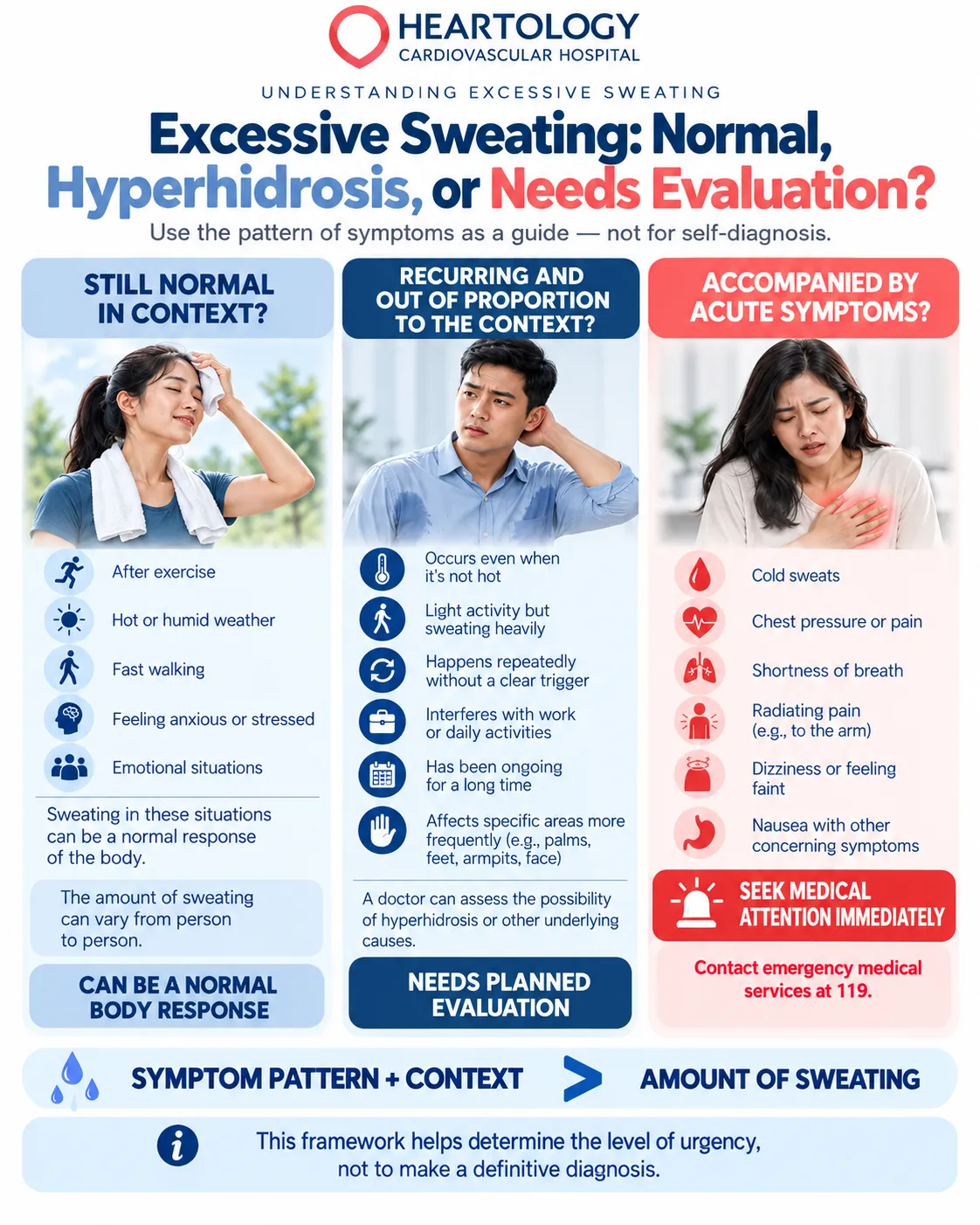
Sweating more than you expect does not necessarily mean you have a medical condition. Heavy sweating during hot weather or exercise can be a normal response. However, sweating that seems disproportionate to the temperature, physical activity, or your body’s condition may be associated with hyperhidrosis or another health problem.
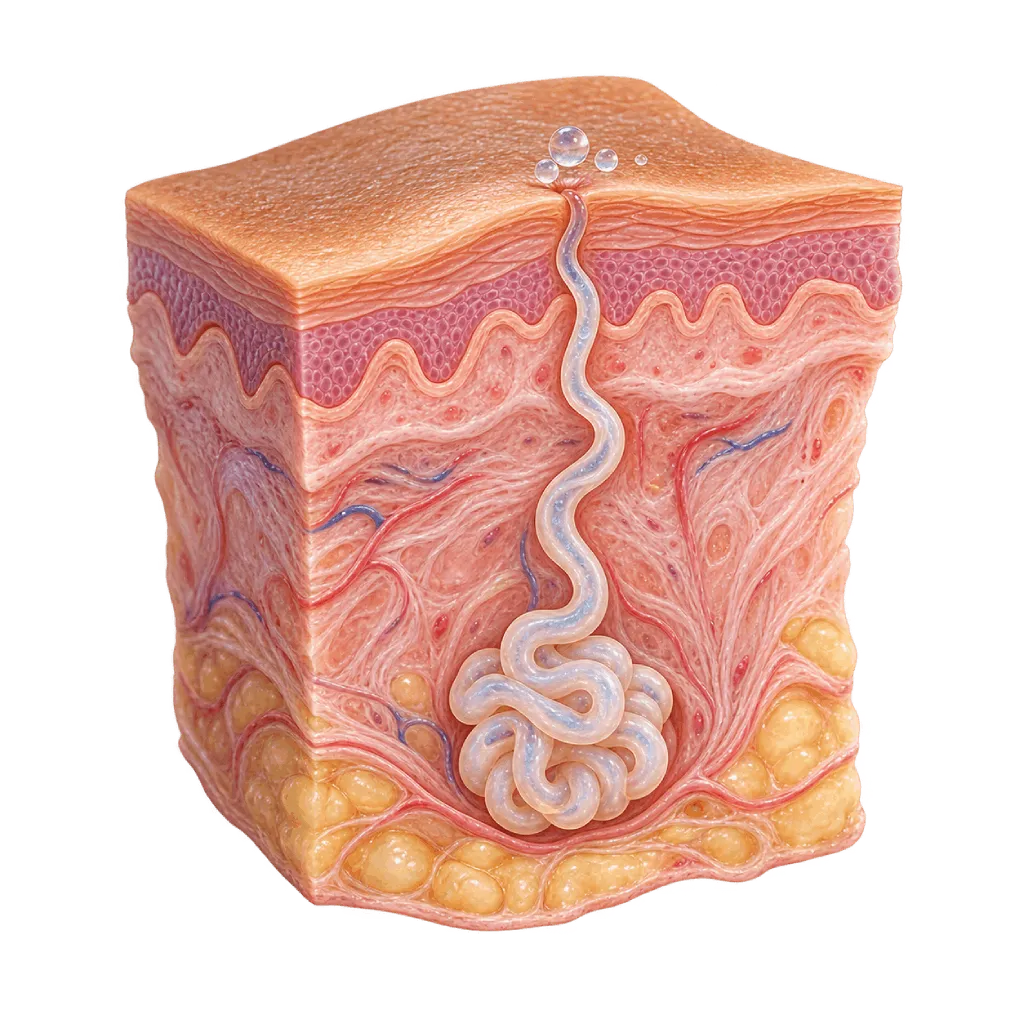
Sweating is one of the ways your body maintains a stable temperature. When body temperature rises, sweat glands release fluid onto the surface of your skin. As this fluid evaporates, it helps release heat and prevents excessive increases in body temperature.
However, sweating is not always triggered by heat. Nervous system activity, emotional responses, and health conditions can also affect sweat production.
When Is Sweating Normal?
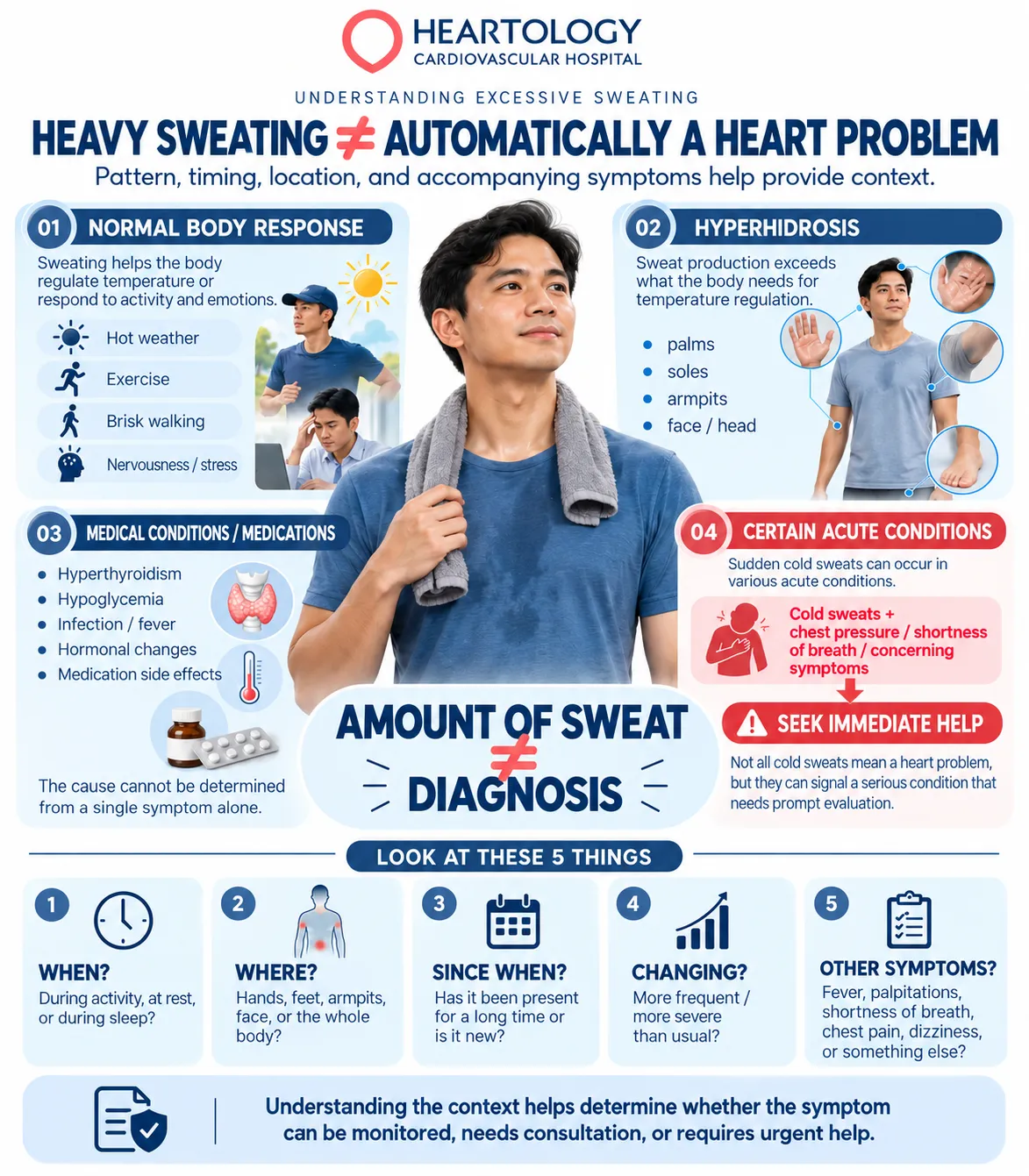
Sweating during exercise, brisk walking, hot weather, or moments of nervousness is a common response. For example, you might sweat heavily after walking to the office, while a colleague who walked a similar distance barely sweats at all.
This difference does not necessarily indicate a health problem. Everyone’s body responds differently to physical activity and environmental temperatures.
That is why the amount of sweat you produce should always be considered in the context of when it occurs.
To determine whether your sweating seems unusual, consider the following:
- Situation: Does the sweating occur after physical activity, during hot weather, or while resting?
- Frequency: Does it happen occasionally or recur frequently?
- Changes in pattern: Have you recently started sweating much more than usual?
- Impact: Does sweating interfere with your work, sleep, or daily activities?
- Accompanying symptoms: Do you also experience fever, palpitations, shortness of breath, or other symptoms?
If you continue sweating despite being in a comfortable environment and engaging in only light activity, the underlying cause deserves attention. Even so, this does not automatically indicate heart disease.
What Is Hyperhidrosis?
Hyperhidrosis is a condition in which the body produces excessive amounts of sweat, even when additional cooling is not needed.
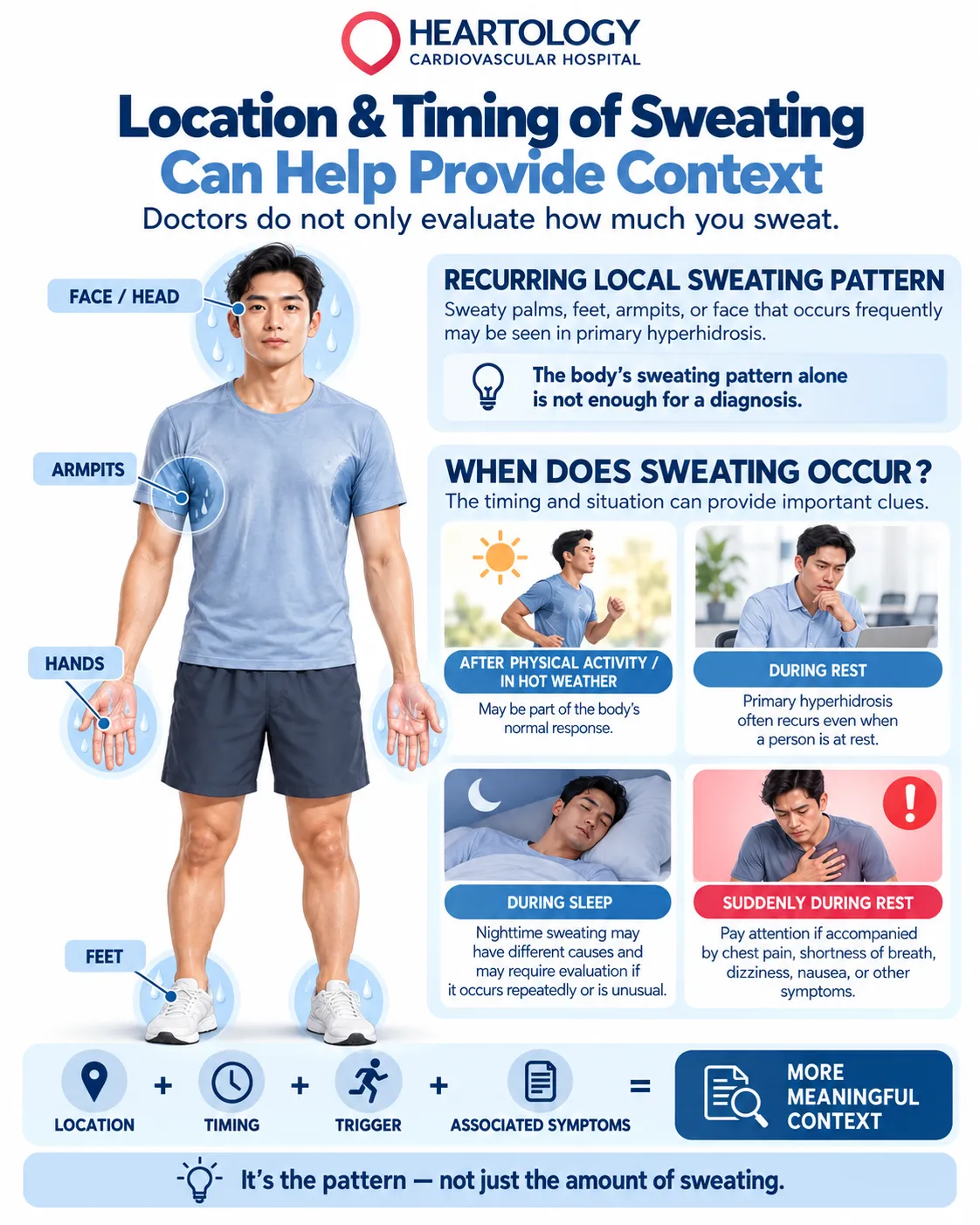
The condition can affect one part of the body or several areas at once. Commonly affected areas include the palms, soles of the feet, armpits, face, and head.
Its impact is not always limited to having wet skin.
Imagine someone who repeatedly needs to dry their palms before shaking hands, handling documents, or using a computer. For others, underarm sweating may soak through clothing even when they have not engaged in strenuous physical activity.
These situations can affect comfort, confidence, and productivity. Some people may even begin avoiding certain activities because they worry that others will notice their sweating. For this reason, hyperhidrosis deserves medical attention even when it is not associated with a serious disease.
Importantly, hyperhidrosis is not a form of heart disease and does not automatically indicate a heart problem. Doctors need to assess the pattern of symptoms and the person’s overall health to determine the cause.
Primary and Secondary Hyperhidrosis
Based on its underlying cause, hyperhidrosis is divided into two main types.
Primary Hyperhidrosis
Primary hyperhidrosis occurs when excessive sweating is not caused by another known disease or medication side effect.
Common characteristics include:
- Beginning during childhood or adolescence.
- More frequently affecting specific areas, such as the hands, feet, or armpits.
- Often occurring on both sides of the body in a relatively symmetrical pattern.
- Recurring while the person is awake.
- Usually decreasing or stopping during sleep.
Some people also have family members with similar symptoms. However, a family history is not required for someone to develop primary hyperhidrosis.
Secondary Hyperhidrosis
Unlike primary hyperhidrosis, secondary hyperhidrosis is associated with certain medical conditions or medication use.
Sweating may affect larger areas of the body, begin for the first time in adulthood, or occur during sleep.
For example, thyroid disorders, low blood sugar, infections, and side effects of certain medications can increase sweat production.
However, sweating patterns are not identical for everyone. The affected areas and the timing of symptoms are only part of the information doctors consider.
Why Does the Body Sweat Excessively?
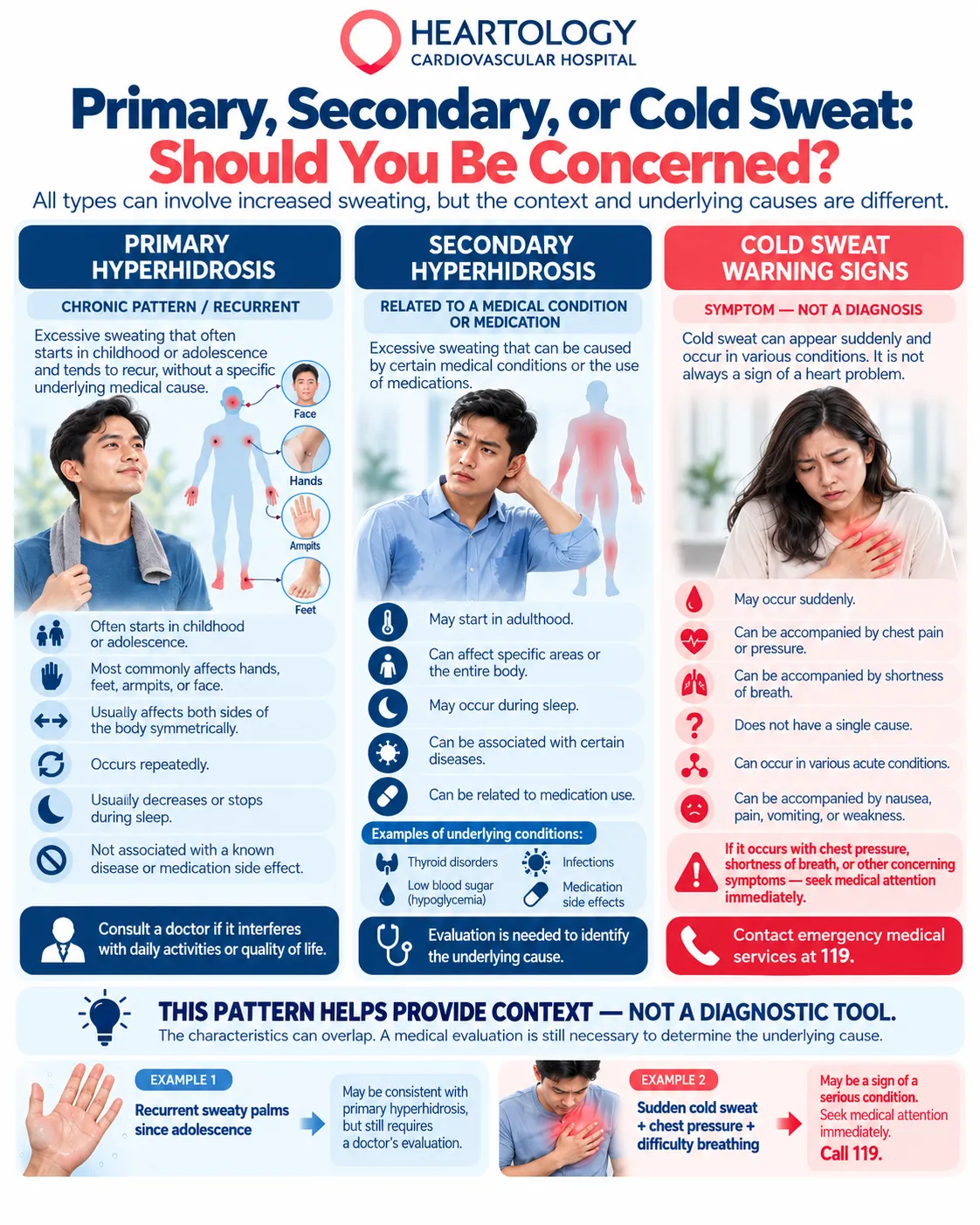
The body may produce excessive sweat because of temperature, physical activity, stress, hormonal changes, certain diseases, or medication use. The cause is not always dangerous, but unusual changes in sweating patterns deserve attention.
Understanding these possible causes is important before assuming that excessive sweating is related to heart disease.
Physical Activity, Temperature, and Stress
During physical activity, muscles generate heat. The body responds by increasing sweat production to help maintain an appropriate temperature.
Air temperature and humidity also play a role. In humid environments, sweat evaporates less easily, which may cause the skin to remain wet for longer.
Emotions can also trigger sweating.
For example, before an important presentation, you may notice sweaty palms or increased underarm sweating. This response is associated with the autonomic nervous system, which regulates various bodily functions automatically.
Factors that can increase sweat production include:
- Hot weather and high humidity.
- Physical activity.
- Situations that cause nervousness or emotional stress.
- Spicy foods.
- Caffeinated beverages.
However, stress is not always the primary cause.
If you begin experiencing excessive sweating that differs from your usual pattern, particularly when accompanied by other physical symptoms, do not automatically attribute it to a busy schedule or work-related fatigue. These changes should be evaluated in the context of your symptoms and medical history.
Medical Conditions Other Than Heart Disease
In addition to primary hyperhidrosis, several medical conditions can increase sweat production through different mechanisms.
Hyperthyroidism
Hyperthyroidism occurs when the thyroid gland produces excessive amounts of thyroid hormones. This increases the body’s metabolic activity. A person may feel hot or sweat more easily, experience heart palpitations, or notice unexplained changes in body weight.
Hypoglycemia
Hypoglycemia occurs when blood glucose levels become too low. It can cause sweating, trembling, hunger, dizziness, weakness, or heart palpitations.
Hypoglycemia is particularly important to recognize in people with diabetes who use insulin or certain blood glucose-lowering medications. However, not every episode of cold sweating in someone with diabetes is caused by hypoglycemia.
Infections and Fever
When the body responds to an infection, its temperature-regulation mechanisms may change. Sweating sometimes increases as body temperature begins to fall after a fever. Symptoms such as chills, coughing, or a general feeling of being unwell may provide additional clues.
Hormonal Changes
Hormonal changes, including those occurring during menopause, can cause sudden sensations of heat and increased sweating.
Other conditions can also cause night sweats. If sweating repeatedly soaks your clothing or bedding despite a cool room temperature, particularly when accompanied by fever or unexplained weight loss, medical evaluation is recommended.
These conditions can produce overlapping symptoms. Therefore, the cause of excessive sweating cannot be determined from a single symptom alone.
Effects of Medications and Health Conditions
Excessive sweating can also be a medication side effect.
Certain antidepressants and other medications may increase sweat production. However, not every medication in the same class causes this effect in every person.
If sweating begins after you start a new medication or your treatment changes, record when the symptoms first appeared. This information can help your doctor assess a possible connection between the medication and your symptoms.
Do not stop taking a medication or change its dose without your doctor’s guidance. Any treatment adjustment needs to consider its benefits, side effects, and the health condition being treated.
Ultimately, two people who both sweat while resting may have entirely different underlying causes. Medical evaluation should therefore be tailored to each individual’s circumstances.
Is Excessive Sweating a Sign of Heart Disease?
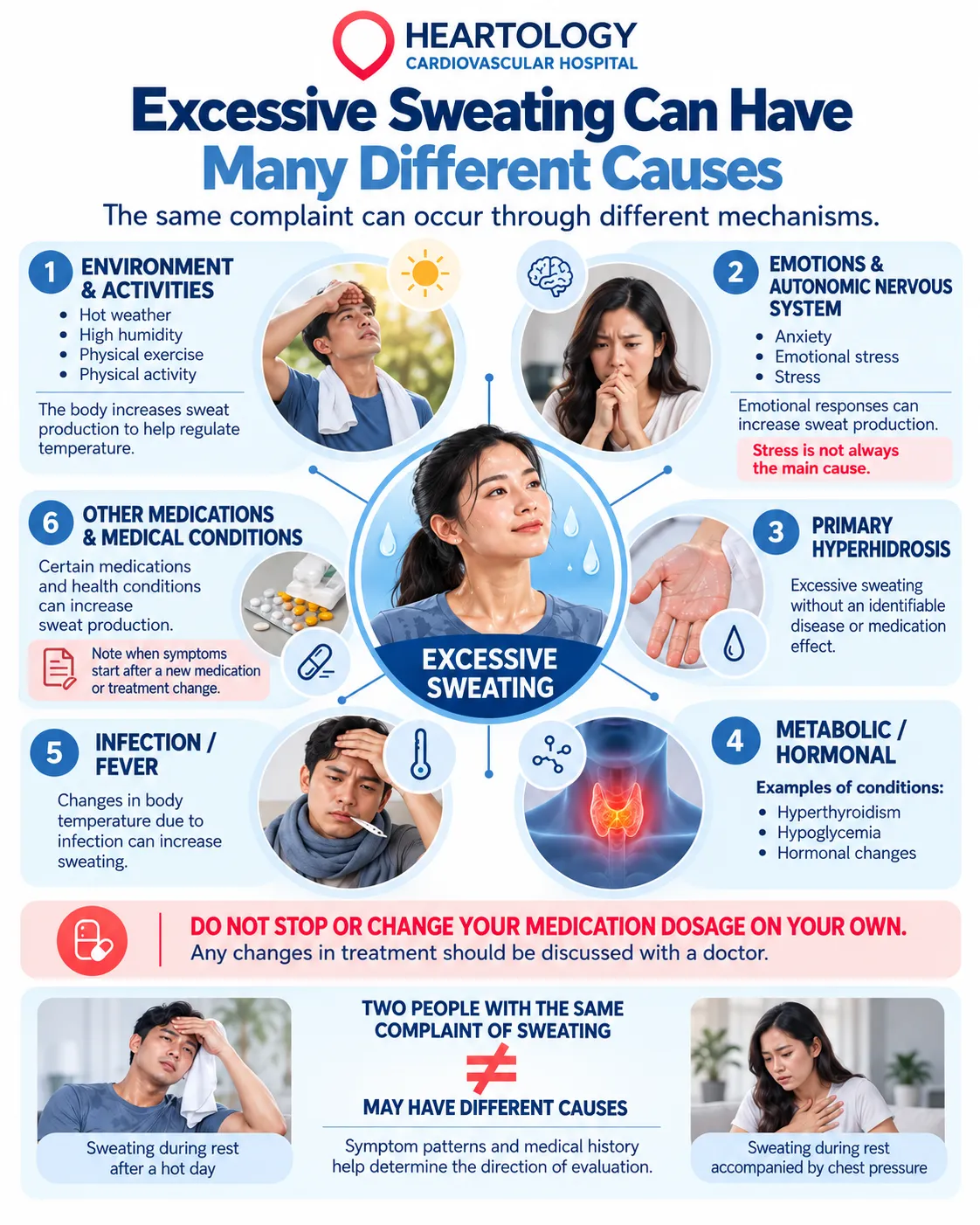
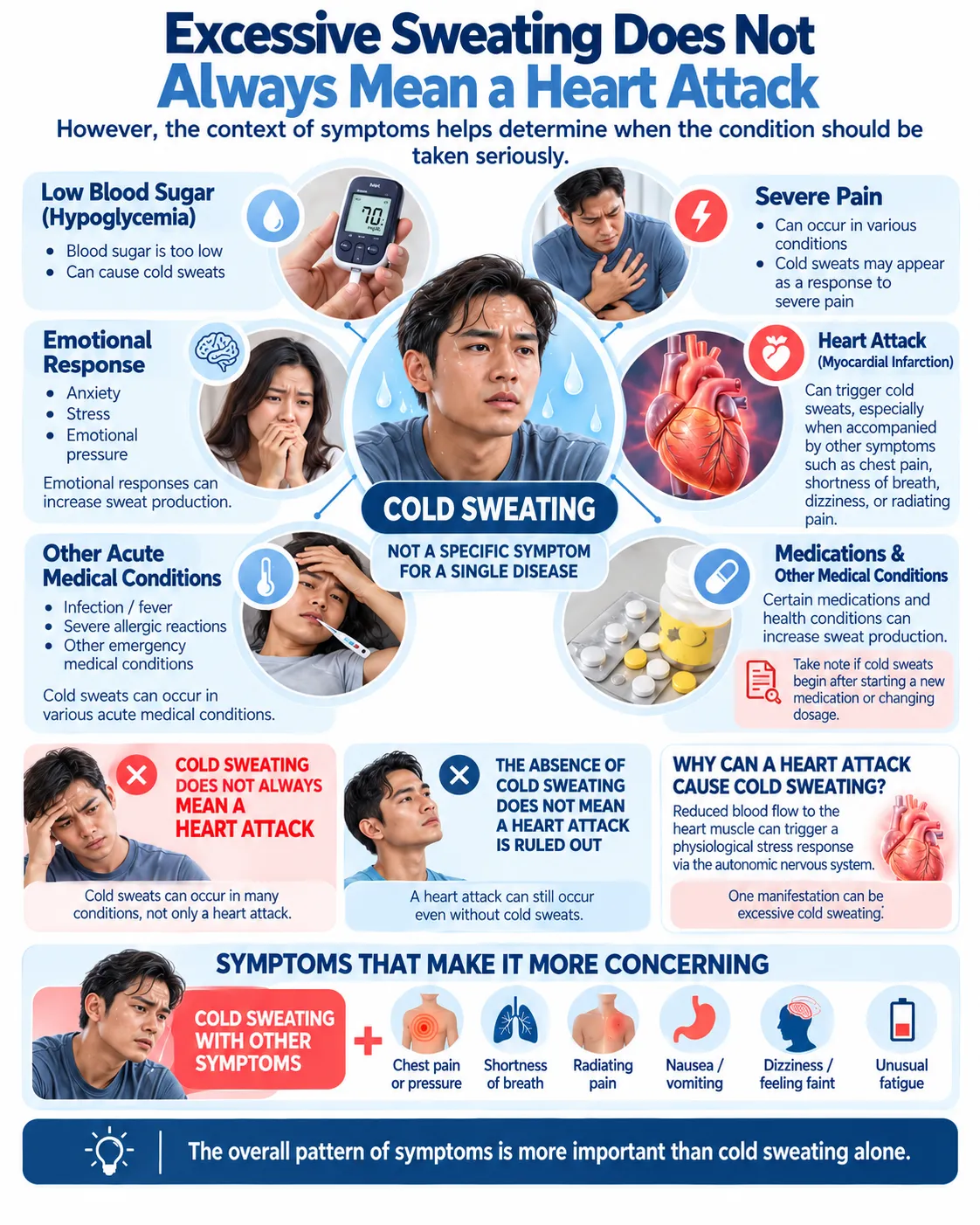
Excessive sweating is not always a sign of heart disease. However, sudden cold sweats can accompany a heart attack, particularly when they occur alongside chest pressure, shortness of breath, nausea, or other concerning symptoms.
Heart disease includes a range of conditions, whereas a heart attack is an acute event caused by disrupted blood flow to the heart muscle. Doctors therefore consider more than just the amount of sweat produced. The timing and pattern of sweating, accompanying symptoms, and overall health are also important.
Why Can a Heart Attack Cause Cold Sweats?
A heart attack occurs when blood flow to part of the heart muscle is acutely reduced or interrupted, usually because of a blocked coronary artery. As a result, the heart muscle receives insufficient oxygen and may sustain injury.
This can trigger a physiological stress response through the autonomic nervous system. One possible manifestation is the sudden onset of cold sweats, even when the person is not feeling hot.
However, cold sweats are not unique to heart attacks. Low blood glucose, severe pain, emotional responses, and other acute medical conditions can cause similar symptoms.
Conversely, a heart attack can occur without noticeable cold sweats. This means that cold sweats alone cannot confirm or rule out a heart attack.
Differences Between Hyperhidrosis and Cold Sweats
Hyperhidrosis and cold sweats have different characteristics, even though both involve increased sweat production. Primary and secondary hyperhidrosis are classifications based on underlying causes. Sudden cold sweats, meanwhile, describe a symptom that can occur in various conditions.
The following table compares their characteristics.
| Characteristic | Primary Hyperhidrosis | Secondary Hyperhidrosis | Sudden Cold Sweats |
|---|---|---|---|
| Onset pattern | Long-standing, recurrent episodes | Depends on the underlying cause | May appear suddenly |
| Affected areas | Usually hands, feet, armpits, or face | May affect large areas of the body | Varies |
| During sleep | Usually decreases or stops | May occur | No characteristic pattern |
| Cause | Not associated with a known disease or medication side effect | Disease or medication side effect | Various conditions, including acute medical emergencies |
| Accompanying symptoms | Sweating is often the main complaint | Depends on the underlying cause | May be accompanied by nausea, pain, dizziness, or weakness |
| Next steps | Consult a doctor if it interferes with daily activities | Investigate the underlying cause | Seek immediate help if warning signs are present |
This table illustrates common patterns and is not a diagnostic tool. These characteristics may overlap.
For example, someone who has experienced sweaty palms since adolescence may have a pattern more consistent with primary hyperhidrosis. However, the situation is different when someone suddenly breaks out in a cold sweat, experiences chest pressure, and has difficulty breathing. This combination should be treated as a possible medical emergency.
Therefore, the context of the symptoms matters more than the amount of sweat alone.
For a broader discussion of the possible causes of cold sweats, you can also read Heartology’s article on the causes of cold sweats and how to manage them.
Other Symptoms to Watch For
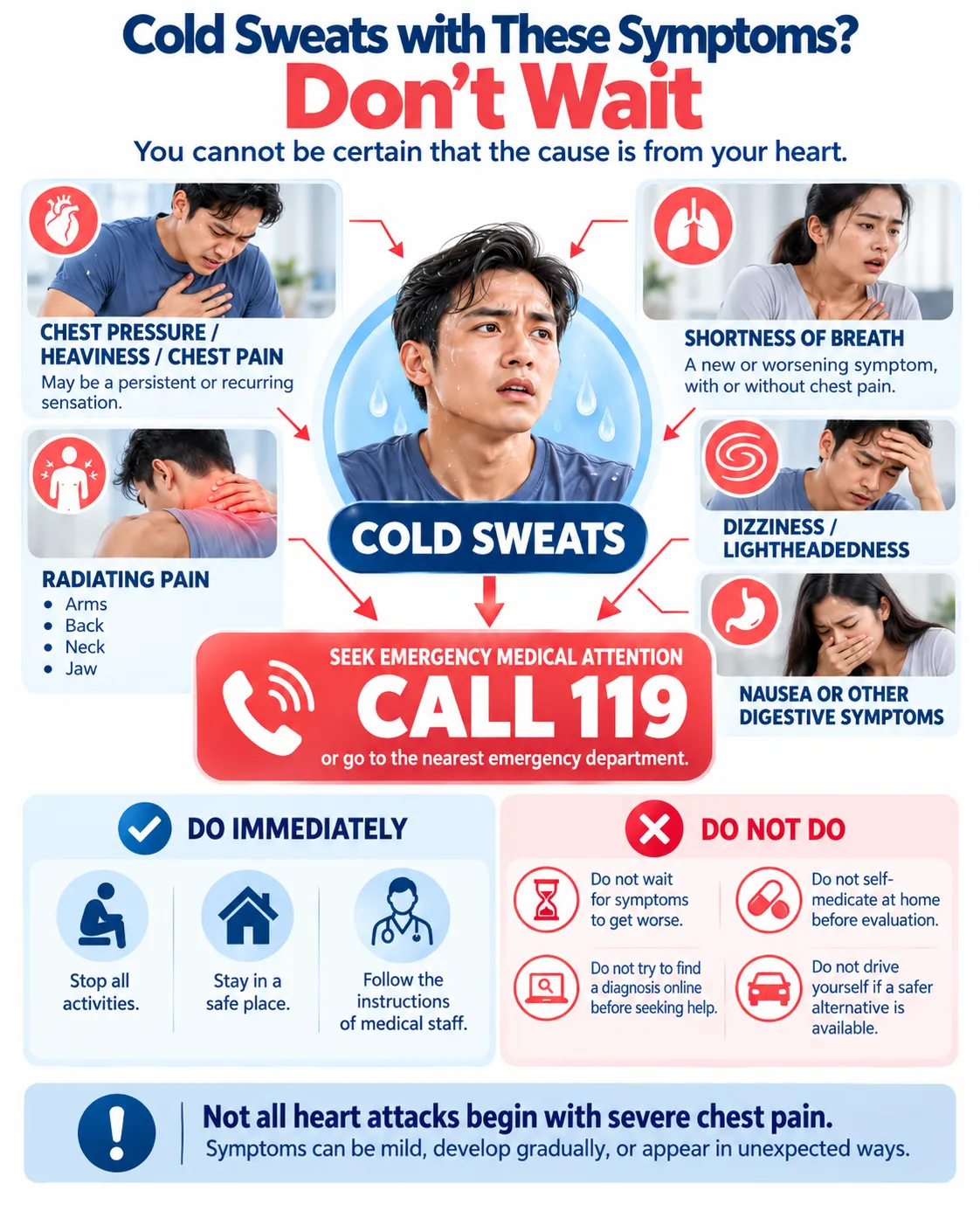
Sudden cold sweats require particular attention when accompanied by symptoms suggestive of a heart attack.
Important warning signs include:
- Chest discomfort. This may feel like pressure, heaviness, pain, or squeezing. The discomfort may persist or come and go.
- Shortness of breath. This may occur with chest pain or without noticeable chest discomfort.
- Pain or discomfort spreading to other areas. It may affect one or both arms, shoulders, back, neck, jaw, or upper abdomen.
- Nausea, vomiting, or dizziness. These are particularly concerning when they occur alongside other suspicious symptoms.
- Unusual fatigue or weakness. In some people, these may be part of a heart attack’s symptoms.
- Heart palpitations accompanied by severe symptoms. Examples include feeling faint, shortness of breath, or chest discomfort.
Not all heart attacks begin with severe chest pain. For some people, symptoms may be mild, develop gradually, or temporarily subside before returning.
These variations are important to recognize, including in people with diabetes, hypertension, or a history of cardiovascular disease.
However, a heart attack can also occur in someone without known risk factors. Therefore, do not assume that acute, concerning symptoms are harmless simply because you have previously been in good health.
To learn more about the different symptom groups, read 5 Heart Attack Warning Signs to Watch For.
When Should You Seek Medical Attention?
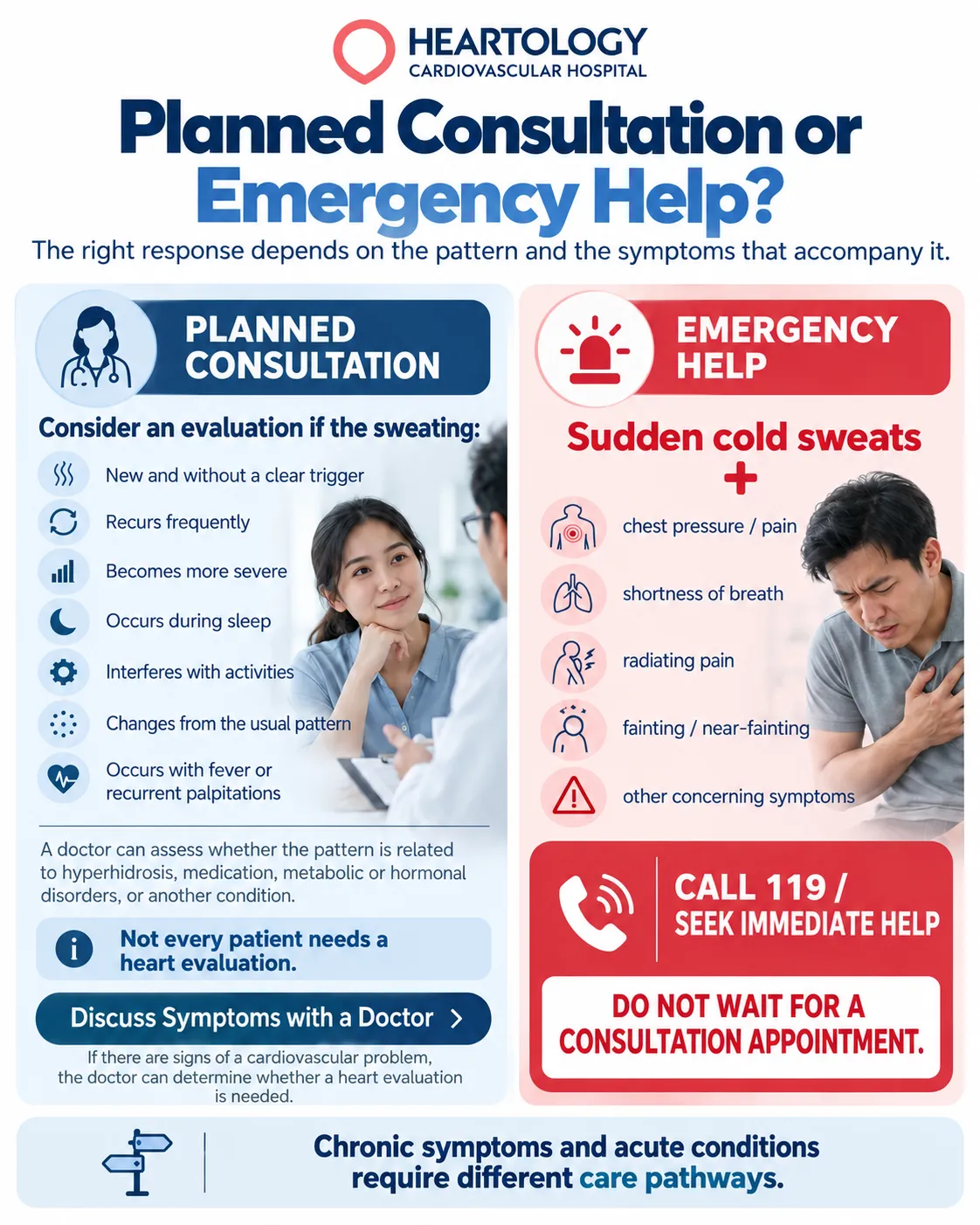
Long-standing excessive sweating without warning signs can be evaluated during a scheduled consultation. However, cold sweats accompanied by symptoms suggestive of a heart attack require immediate medical attention.
Understanding this difference in urgency is important so that you do not delay getting help when it is needed.
Warning Signs That Require Immediate Medical Attention
Seek emergency medical care immediately if you experience sudden cold sweats accompanied by chest pressure or pain, shortness of breath, fainting, or other symptoms suggestive of a heart attack.
You do not need to determine on your own whether the cause is actually related to your heart.
If you are currently experiencing these symptoms, call Indonesia’s emergency medical service at 119 immediately. Stop your activities, remain in a safe place, and follow the emergency personnel’s instructions.
Do not wait for symptoms to become more severe, try home remedies, or search online for a diagnosis before seeking help.
Do not delay calling for help to try home remedies or wait for the symptoms to disappear. Do not drive yourself if safer transportation or emergency assistance is available.
For guidance on what to do if symptoms appear while you are alone, read What to Do If You Have a Heart Attack While Alone. This guidance is not a substitute for calling emergency services when symptoms are occurring.
When Should You Consult a Doctor?
Not every case of excessive sweating requires a visit to the emergency department. However, sweating that repeatedly occurs, has recently developed, or has changed from your usual pattern still deserves medical evaluation.
A consultation can help your doctor determine whether the symptoms are associated with primary hyperhidrosis, medication effects, metabolic disorders, or other medical conditions.
The type of doctor you should see depends on your symptoms. For example, primary hyperhidrosis may be evaluated by a dermatologist, while suspected hormonal disorders or other medical conditions may require different investigations.
If there are indications of a cardiovascular problem, your doctor may recommend a heart evaluation. However, not everyone with hyperhidrosis needs to see a cardiologist.
How Is Excessive Sweating Diagnosed and Treated?
Evaluating excessive sweating aims to identify the underlying cause and determine appropriate treatment. Doctors usually begin by reviewing the patient’s symptoms and performing a physical examination, then consider additional tests if necessary.
This approach is important because primary hyperhidrosis, thyroid disorders, hypoglycemia, and heart disease have different underlying mechanisms and diagnostic requirements.
How Do Doctors Evaluate the Symptoms?
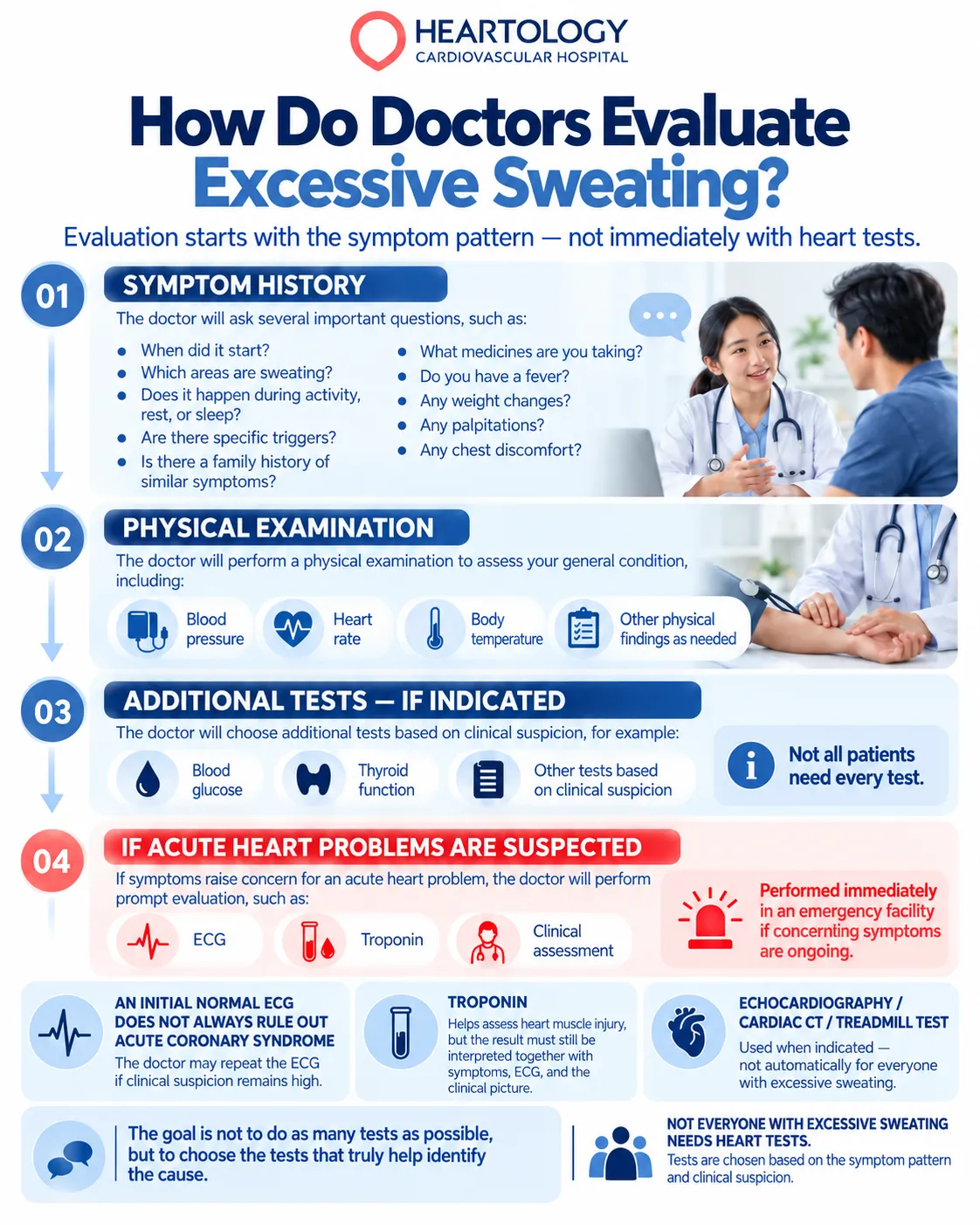
The first step is to understand your sweating pattern.
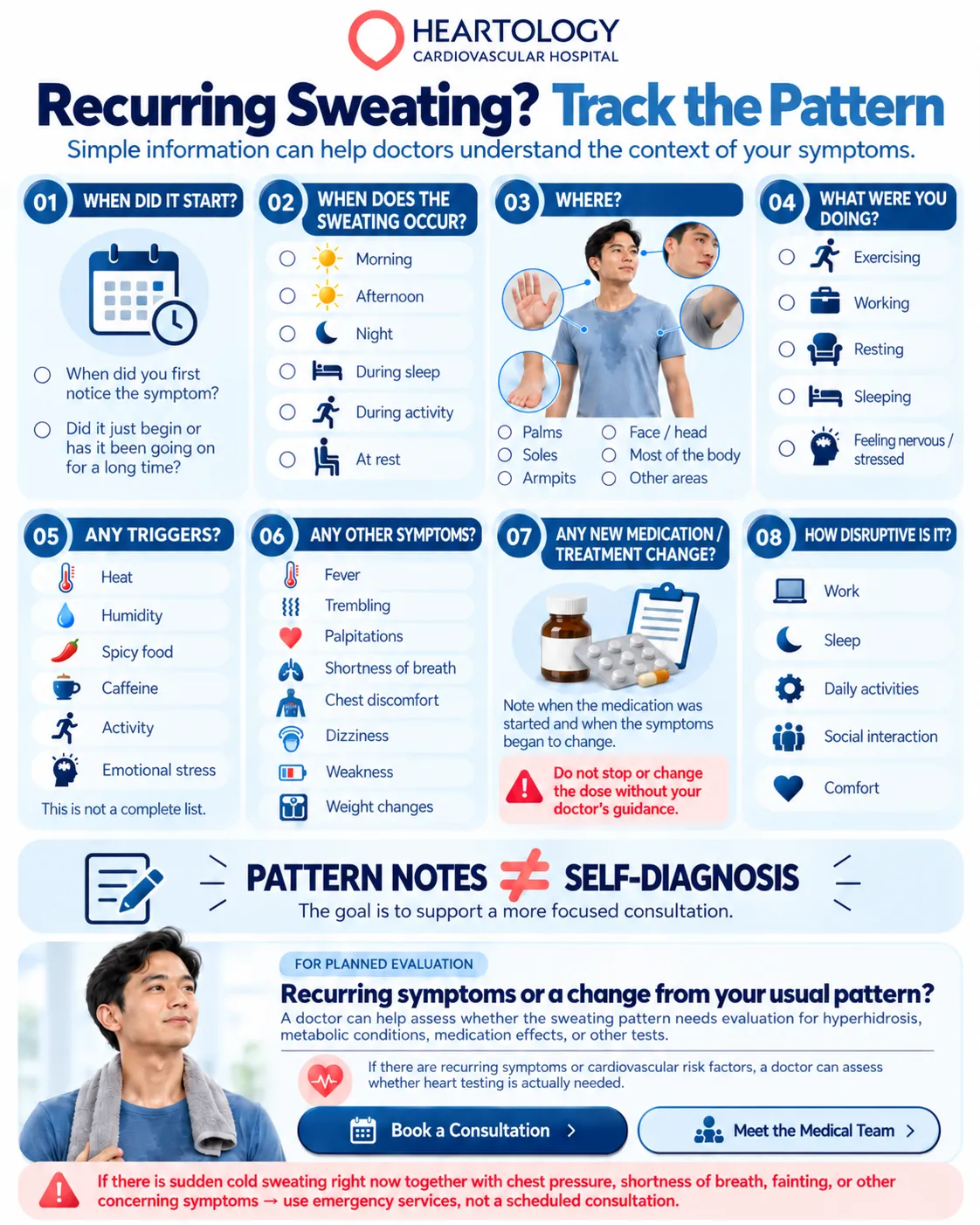
Your doctor may ask questions such as:
- When did the excessive sweating first begin?
- Does it affect one part of your body or almost your entire body?
- Does it occur during physical activity, while resting, or during sleep?
- Are there particular activities, foods, or situations that trigger it?
- Do any family members experience similar symptoms?
- What medications are you currently taking?
- Have you experienced fever, changes in body weight, heart palpitations, or chest discomfort?
Your doctor may then check your blood pressure, pulse, body temperature, and other physical findings.
If secondary hyperhidrosis is suspected, additional tests, such as blood glucose or thyroid function tests, may be considered based on the clinical findings.
Conversely, if your symptoms follow a pattern typical of primary hyperhidrosis and there are no signs of another medical condition, extensive additional testing may not be necessary.
The goal is not to perform as many tests as possible, but to select investigations that genuinely help identify the cause and guide treatment.
Tests When a Heart Condition Is Suspected
If cold sweats occur alongside symptoms suggestive of a heart attack, evaluation must take place promptly in an emergency care setting. In this situation, doctors may use an electrocardiogram (ECG/EKG), troponin testing, and other clinical assessments to evaluate the possibility of acute coronary syndrome.
The following tests are used according to clinical indications.
Electrocardiogram (ECG/EKG)
An electrocardiogram records the heart’s electrical activity through electrodes attached to the skin. This test can help doctors identify heart rhythm disturbances and changes suggestive of impaired blood flow to the heart muscle.
However, an initial ECG that does not show specific abnormalities does not necessarily rule out acute coronary syndrome. If clinical suspicion remains high, doctors may need to repeat the ECG.
Troponin Testing
Troponin is a protein whose blood levels can increase when the heart muscle is injured. When a heart attack is suspected, doctors assess troponin levels alongside the patient’s symptoms, ECG findings, and overall clinical condition.
Troponin testing may need to be repeated according to clinical protocols because the initial result may not provide a complete picture, particularly when a patient arrives very soon after symptoms begin. Elevated troponin indicates heart muscle injury, but it does not always mean that a heart attack is the underlying cause.
Echocardiography
Echocardiography is a test that uses ultrasound waves to assess the heart’s structure and function. It can provide information about heart muscle movement and pumping function according to clinical needs.
However, echocardiography is not automatically necessary for everyone experiencing excessive sweating. An outpatient examination must not replace immediate emergency evaluation when symptoms suggest a heart attack.
The same principle applies to cardiac CT scans, exercise stress tests (treadmill tests), and other examinations. Each test has its own clinical indications.
How to Manage Excessive Sweating
Managing excessive sweating depends on its cause and how much it affects daily life.
If sweating is related to physical activity or the environment, simple measures may help, such as wearing comfortable clothing, maintaining a comfortable room temperature, and identifying triggers that can be controlled.
Primary hyperhidrosis, meanwhile, may require specific treatment. Options that doctors may consider include: [3]
- Antiperspirants: Products that help reduce sweat production in specific areas.
- Iontophoresis: A treatment that uses a low-intensity electrical current, usually to help manage hyperhidrosis affecting the hands or feet.
- Other medical treatments: Certain medications or procedures selected according to symptom severity, affected body areas, and the patient’s needs.
No single treatment is appropriate for everyone with hyperhidrosis. Each option has its own benefits, limitations, and potential side effects.
When excessive sweating results from another medical condition, managing that underlying condition becomes an important part of treatment.
For example, treating hyperthyroidism is different from managing hypoglycemia. Similarly, if sweating is associated with medication use, any changes to treatment should be discussed with the prescribing doctor.
You can also support the evaluation process by keeping a record of your sweating patterns during everyday activities.
Conclusion
Excessive sweating can result from normal bodily responses, hyperhidrosis, or other medical conditions. Therefore, the question “Is excessive sweating a sign of heart disease?” cannot be answered based solely on how much you sweat.
Pay attention to the pattern of symptoms and any accompanying complaints, and seek medical evaluation when appropriate. If you develop warning signs suggestive of a heart attack, call Indonesia’s emergency medical service at 119 immediately.
Understanding these differences can help you approach your health with greater peace of mind and take the appropriate next steps.
Medical Disclaimer: The information in this article is intended for health education and does not replace medical examination, diagnosis, or treatment by a doctor. If you experience symptoms suggestive of a heart attack, call Indonesia’s emergency medical service at 119 immediately.
Keep as a reminder
Checklist before Your Consultation
Tick what you have prepared.
0 of 6 items checked
Checks are kept only while this page is open.
Next step
Want to Find the Right Doctor?
Learn about doctors by specialty and clinical focus before you decide on your next step.
The information on this page is for educational purposes and does not replace medical consultation, diagnosis, or treatment. For any health concerns, please consult a doctor directly.
Doctors Related to This Topic

Dr. dr. Dafsah A. Juzar, Sp.JP(K)
Interventional Cardiology
Coronary Intervention Procedures +1 center
Clinical focusComplex Coronary Intervention · Cardiac Catheterization
View Profile
Dr. dr. Jajang Sinardja, Sp.JP(K)
Interventional Cardiology
Coronary Intervention Procedures
Clinical focusAcute Coronary Syndrome · Primary Coronary Intervention
View Profile
Dr. med. dr. Denio A. Ridjab, Sp.JP(K)
Interventional Cardiology
Coronary Intervention Procedures +2 centers
Clinical focusInterventional Cardiology · Coronary Artery Disease
View ProfileFrequently Asked Questions.
Excessive sweating often raises questions, especially when it occurs without physical activity or is accompanied by other symptoms. Could it be hyperhidrosis, a sign of heart disease, or something else entirely? Below are answers to frequently asked questions to help you understand the possible causes, recognize warning signs that should not be ignored, and know when medical evaluation may be necessary.
Does Excessive Sweating Always Mean Hyperhidrosis?
No. Excessive sweating can also be triggered by hot temperatures, physical activity, stress, or other medical conditions. Hyperhidrosis is one possible cause, characterized by sweat production beyond the body’s needs. A doctor needs to assess the pattern of symptoms to determine the cause.
Are Sweaty Hands a Sign of Heart Disease?
Frequently sweaty hands are not a specific sign of heart disease. One possible cause is primary hyperhidrosis, particularly if the symptoms have recurred since a young age. However, sudden changes accompanied by other symptoms still deserve attention.
Are Cold Sweats Always Dangerous?
Not always. Cold sweats can occur for various reasons, including emotional responses, hypoglycemia, or pain. However, if they develop suddenly alongside chest pressure, shortness of breath, or other concerning symptoms, seek immediate medical attention.
Can a Heart Attack Occur Without Chest Pain?
Yes. Although chest discomfort is a common symptom, some people may experience shortness of breath, nausea, cold sweats, or unusual fatigue without obvious chest pain. Therefore, the absence of chest pain does not guarantee that the condition is harmless.
Why Do I Sweat in an Air-Conditioned Room?
Sweat production is influenced by more than temperature. Emotional responses, hyperhidrosis, medications, and certain medical conditions can cause sweating even in a cool environment. If the symptoms persist or change from your usual pattern, consider consulting a doctor.
What Causes Excessive Sweating During Sleep?
Sweating during sleep can be triggered by room temperature, heavy blankets, hormonal changes, medications, or certain medical conditions. If your clothing and bedding repeatedly become soaked despite a cool room temperature, particularly when accompanied by fever or unexplained weight loss, medical evaluation is recommended.
Can Diabetes Cause Cold Sweats?
Yes, particularly during hypoglycemia, when blood glucose levels become too low. Symptoms may include sweating, trembling, hunger, weakness, or heart palpitations. However, cold sweats in someone with diabetes are not always caused by hypoglycemia.
Can Stress Cause Excessive Sweating?
Stress can increase sweat production through the autonomic nervous system’s response. It can also worsen symptoms in some people with hyperhidrosis. Nevertheless, do not automatically attribute newly developed sweating or sweating accompanied by other symptoms to stress.
When Should Excessive Sweating Be Evaluated?
Excessive sweating should be evaluated if it has recently developed, frequently recurs without an obvious trigger, becomes more severe, occurs during sleep, or begins interfering with daily activities. If symptoms suggest a medical emergency, seek immediate assistance rather than waiting for a scheduled consultation.
How Is Excessive Sweating Evaluated?
Doctors usually begin by reviewing the patient’s symptoms and performing a physical examination. Additional tests, such as blood glucose testing, thyroid function tests, or cardiac evaluation, are performed according to clinical indications. Not everyone who experiences excessive sweating needs an ECG or other heart tests.
Sources and Transparency.

Reviewer
Translated from the Indonesian edition medically reviewed by dr. Debby C. Soemitha, Sp.PD, Internal Medicine on October 27, 2026.
Sources as cited in the Indonesian edition.
- American Academy of Dermatology Association. (2024). Hyperhidrosis: Signs and symptoms. American Academy of Dermatology Association.
- American Academy of Dermatology Association. (2024). Hyperhidrosis: Causes. American Academy of Dermatology Association.
- American Academy of Dermatology Association. (2024). Hyperhidrosis: Diagnosis and treatment. American Academy of Dermatology Association.
- National Health Service (NHS). Excessive sweating (hyperhidrosis). NHS.
- Mayo Clinic. Excessive sweating: Causes and definition. Mayo Clinic.
- National Institute of Diabetes and Digestive and Kidney Diseases (NIDDK). (2021). Low blood glucose (hypoglycemia). National Institutes of Health.
- National Health Service (NHS). (2023). Night sweats. NHS.
- American Heart Association. (2024). Warning signs of a heart attack. American Heart Association.
- Rao SV, et al. (2025). 2025 ACC/AHA/ACEP/NAEMSP/SCAI Guideline for the Management of Patients With Acute Coronary Syndromes: A Report of the American College of Cardiology/American Heart Association Joint Committee on Clinical Practice Guidelines. Journal of the American College of Cardiology, 85(22), 2135–2237.
- Kementerian Kesehatan Republik Indonesia. PSC 119. Kementerian Kesehatan RI.
- Tim Promkes RSST RSUP dr. Soeradji Tirtonegoro Klaten. (2023). Penyebab terjadinya hiperhidrosis. Direktorat Jenderal Kesehatan Lanjutan, Kementerian Kesehatan Republik Indonesia.
The information on this page is for educational purposes and does not replace medical consultation, diagnosis, or treatment. For any health concerns, please consult a doctor directly.
If you find information that needs clarifying, let us know through our Contact Us page.