Quick answer
Side effects that may occur after heart stent placement include infection, bleeding, blood clots, transient ischemic attack or stroke, heart rhythm disorders, and temporary kidney problems. Fatal complications are rare. Your doctor will give you instructions on what to do and what to avoid after the procedure, and lifestyle changes are still needed because a stent does not completely cure coronary heart disease.
Heart stent placement is a procedure to treat blocked blood vessels of the heart. After a heart stent is placed, there may be side effects you should watch out for.
For your information, heart stent placement is usually performed in patients with coronary heart disease. It is done with the aim of optimizing heart function.
Once the procedure is complete, your doctor will give you instructions on what to do and what to avoid in order to anticipate side effects after heart stent placement.
Side Effects of Heart Stent Placement You Should Know About
As with other types of procedures, there are side effects that may appear after this procedure.
Side effects of heart stent placement are usually mild and can be managed by your doctor, but you still need to watch out for them. Here are some of the side effects:
1. Infection
There may be a risk of wound infection, lung infection, bladder infection, and heart valve infection (endocarditis) after heart stent placement. You may be given antibiotics to reduce this risk.
2. Bleeding
A heart stent is placed to improve the flow of blood in and out of the heart; sometimes surgery is also performed to stop excessive bleeding caused by the stent placement.
3. Blood Clots
This may happen if you have had a mechanical heart valve replacement. To deal with this, you will be given anticoagulant medication from the start if your doctor suspects that you are at risk of developing blood clots after the procedure.
4. Transient Ischemic Attack or Stroke
Heart stent placement can also increase the risk of a stroke or transient ischemic attack. These conditions are marked by a reduced blood supply from the heart to the brain.
5. The Stent Wears Out
This risk or side effect is more likely to occur in patients who had their heart stent placed a long time ago. Over a fairly long period, the stent can wear out.
If that happens, you will need to undergo another medical procedure to replace the old stent with a new one.
6. Heart Rhythm Disorders (Arrhythmia)
Some people may experience this risk after heart stent placement, and it can develop over time.
In a small number of people, a pacemaker may need to be implanted to control the heartbeat after the procedure.
7. Kidney Problems
The kidneys may not work as usual during the first few days after heart stent placement. In some cases, temporary dialysis may be performed.
Heart stent placement rarely has fatal complications. Even so, the risk of death still exists, especially if many complications occur.
The Function of a Heart Stent
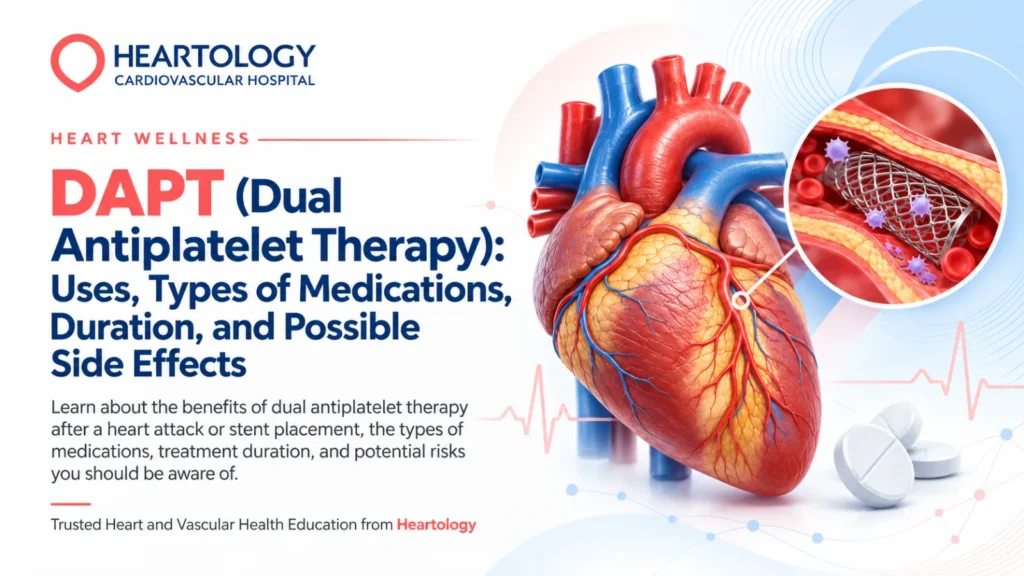
Heart stent placement is one of the treatment options for people with coronary heart disease. Its function is to improve the flow of blood and oxygen from the heart to the whole body.
In coronary heart disease, the blood vessels usually become blocked because of a buildup of cholesterol plaque on the artery walls. Even so, people with coronary heart disease do not always need a stent.
This procedure is performed to improve the quality of life of patients with coronary heart disease, especially when it is already severe. In addition, this procedure may be performed in patients having a heart attack.
However, getting a stent does not mean that heart disease will be completely cured and will never come back. Lifestyle changes are needed to recover from heart disease.
Steps you can take include not smoking, keeping your body weight at a healthy level, keeping your cholesterol, blood sugar, and high blood pressure at optimal levels, and exercising regularly.
At Heartology Cardiovascular Hospital, a team of cardiac subspecialists handles diagnostic testing, interventions, heart and blood vessel surgery, and arrhythmia care.
Keep as a reminder
Checklist before Your Consultation
Tick what you have prepared.
0 of 6 items checked
Checks are kept only while this page is open.
After reading
Discuss Your Questions with a Doctor.
Bring your notes and any test results you want to discuss. A consultation helps decide which tests and treatment are right for you.
Our team confirms the schedule and what you need for your visit. The information on this page is for educational purposes and does not replace medical consultation, diagnosis, or treatment. For any health concerns, please consult a doctor directly.
Doctors Related to This Topic

dr. Adrianus Kosasih, Sp.JP(K)
Interventional Cardiology
Coronary Intervention Procedures
Clinical focusPrimary Coronary Intervention · PCI for Acute Coronary Syndrome
View Profile
dr. Puti S. Saus, Sp.JP(K)
Interventional Cardiology
Coronary Intervention Procedures
Clinical focusAcute Coronary Syndrome · Primary Coronary Intervention
View Profile
Dr. dr. Jajang Sinardja, Sp.JP(K)
Interventional Cardiology
Coronary Intervention Procedures
Clinical focusAcute Coronary Syndrome · Primary Coronary Intervention
View ProfileSources and Transparency.
The information on this page is for educational purposes and does not replace medical consultation, diagnosis, or treatment. For any health concerns, please consult a doctor directly.
If you find information that needs clarifying, let us know through our Contact Us page.