Quick answer
Some medical heart terms that patients often hear include ECG (a recording of the heart's electrical activity), echocardiography (an ultrasound to see the heart's structure and movement), arrhythmia (an irregular heart rhythm), heart failure (reduced pumping power, not a heart that has stopped), coronary heart disease (narrowing of the coronary arteries), and heart attack (a sudden stop in blood flow to the heart muscle). Understanding these terms helps you talk with your doctor.
For many people, sitting in a cardiologist’s consulting room feels tense, even before the test results are explained. It is not only fear of the disease itself, but also the string of medical heart terms that sound unfamiliar and hard to understand. When the doctor mentions an ECG, arrhythmia, or narrowed blood vessels, patients often just nod, while keeping their confusion and anxiety to themselves.
However, this unease is actually no small matter. In fact, a patient’s understanding of their medical condition plays a major role in the quality of care and decision-making. That is why understanding medical heart terms is not about becoming medically clever, but about helping yourself feel calmer, more involved, and more confident when talking with your doctor. When these terms start to make sense, a medical conversation shifts from one-way communication to a dialogue of mutual understanding, and as a result, patients feel more in control of their health.
The information presented here is not intended to replace a direct consultation with a doctor, but to serve as an initial guide so that you do not feel lost when medical terms are mentioned. At Heartology Cardiovascular Hospital, cardiologists can help explain these terms according to your condition. With the right understanding, you can move on to the next step, understanding why these terms matter, with a sense of security, clarity, and hope.
Why Is It Important to Understand Medical Heart Terms?
Understanding medical heart terms is not just about adding to your health knowledge. More than that, this understanding directly affects the quality of communication between doctor and patient. When the terms a doctor uses feel clear and understandable, the conversation no longer runs in one direction. Patients can ask relevant questions, express their concerns more specifically, and truly understand what is happening in their body.
However, the benefits do not stop at communication. Medical heart terms are also an important foundation for building trust in a treatment plan. In fact, patients who understand their medical condition tend to have more trust in, and better adherence to, the recommended therapy. When terms such as “narrowed blood vessels” or “heart rhythm disorder” are understood, medical decisions no longer feel abstract or frightening, but logical and purposeful.
In addition, understanding medical heart terms is closely linked to more informed medical decision-making. In the modern medical approach known as shared decision-making , patients do not just receive decisions, but play an active role in them. The right decisions come from collaboration between a doctor and a patient who both understand medical information proportionately. That is why patients who understand medical terms can weigh the benefits, risks, and long-term effects of treatment according to their condition and lifestyle.
For busy, digital-savvy urban communities, clear terminology is becoming even more relevant. Many patients are used to looking up health information on their own before or after a consultation. Without a proper understanding of medical heart terms, digital information risks being misinterpreted. That is why health literacy is key to helping people play an active and responsible role in looking after their heart health.
It is important to stress that patients have the right to understand their health condition. Medical terms were not created to frighten people, but to make sure that diagnosis and care are carried out accurately and safely. When medical heart terms are explained with empathy and in the right language, patients not only feel calmer, but are also better prepared to understand the basics of heart anatomy and function, an important step before getting to know further medical terms in more depth.
Basic Terms About Heart Anatomy and Function
Understanding medical heart terms will feel much easier once we know the basics first. So before discussing terms related to tests or diagnoses, it is important to understand how the heart and blood vessels work, and what the basic numbers that almost always come up during a checkup mean. This section is the starting foundation: simple, relevant, and helpful for following your doctor’s explanation more calmly.
The Heart and Blood Vessels: The Basis of the Circulatory System
The heart is a muscular organ that works continuously to pump blood throughout the body. Its function is not only to keep blood flowing, but also to make sure every organ receives the oxygen and nutrients it needs to function properly. That is why even the smallest problem with the heart can have wide-reaching effects on the body’s overall health.
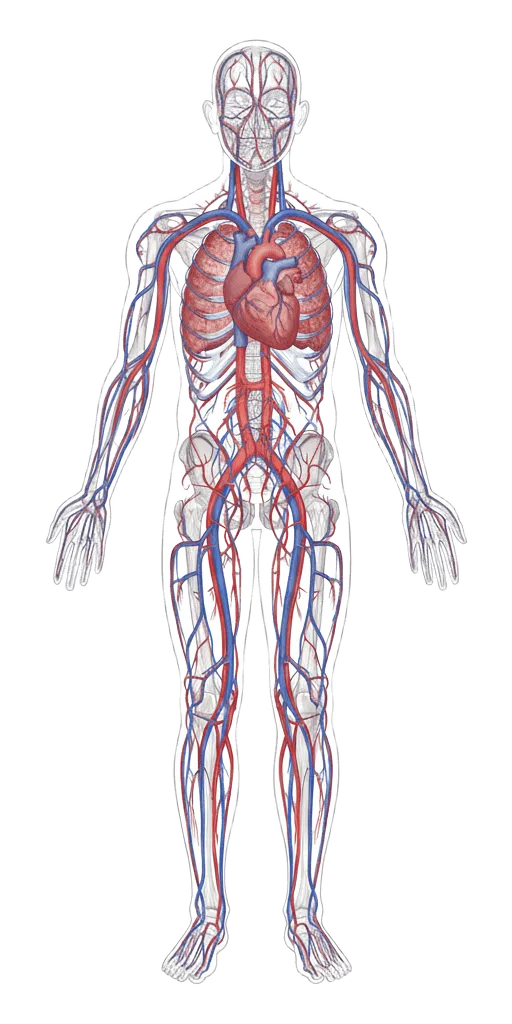
And for blood to flow smoothly, the heart works together with the blood vessels, which are generally divided into:
- Arteries, the vessels that carry blood away from the heart to the rest of the body.
- Veins, the vessels that carry blood back to the heart.
- Capillaries, very small blood vessels where oxygen and nutrients are exchanged with the body’s tissues.
In fact, these terms often come up when a doctor explains conditions such as “narrowed arteries” or “impaired blood flow”. In this context, medical heart terms are used not to frighten patients, but to pinpoint the location and mechanism of the problem precisely, so that it can be treated appropriately.
Heart Rate and Blood Pressure: Numbers Your Doctor Always Asks About
Next, almost every heart checkup begins with measuring the heart rate and blood pressure. These two numbers often look simple, but they actually give an important picture of how the heart is working.
Heart rate shows how many times the heart beats in one minute. This number reflects how hard the heart is working to meet the body’s needs. Heart rate can change depending on activity, stress levels, or certain health conditions. That is why doctors use this value as an early indicator of whether the heart rhythm is still within normal limits.
Meanwhile, blood pressure describes the force of blood as it flows through the vessels. This pressure helps the doctor assess the condition of the blood vessels as well as the heart’s workload. Regular blood pressure measurement plays an important role in detecting the risk of heart disease even before complaints appear.
In your test results, you may come across medical heart terms such as:
- Systolic and diastolic blood pressure
- Heart rate (HR)
- Normal, high, or low blood pressure
By understanding these basic terms, the numbers in your test results will no longer feel unfamiliar. Instead, you will start to understand what they mean for your heart health as a whole.
Why Does This Basic Understanding Matter?
Heart anatomy, heart rate, and blood pressure are the basis of almost all the medical heart terms discussed next. Without this understanding, test terms such as ECG or echocardiography will feel far more confusing. With a clear foundation, however, you are ready to move on to the next step, understanding medical heart terms related to tests, with more confidence and a better sense of control.
Medical Heart Terms Related to Tests
When undergoing a heart checkup, patients are often faced with medical terms that sound technical and confusing. Yet understanding the medical heart terms related to tests actually helps you feel calmer and more involved in the care process. These tests are not just routine procedures, but important tools that allow the doctor to “listen” to the signals your heart is giving.
Furthermore, this basic understanding allows for more open communication between patient and doctor, an important foundation for making the right medical decisions.
ECG (Electrocardiogram)
What is an ECG and what does it measure?
An ECG is a test that records the heart’s electrical activity. Every heartbeat produces a faint electrical signal, and the ECG captures the pattern of these signals through electrodes attached to the skin. From these results, the doctor can assess whether the heart rhythm is normal or shows certain disturbances.
Why is an ECG often the first test?
Indeed, an ECG is often the first test because:
- The process is quick and non-invasive.
- It gives an initial picture of the heart rhythm.
- It helps the doctor decide on further tests if needed.
That is why an ECG is often done at the first visit, especially when a patient complains of chest pain, palpitations, or shortness of breath.
Common misconceptions about the ECG
However, an ECG is not a test that “answers everything”. A result that looks abnormal does not necessarily indicate a serious disease. Conversely, a result that looks normal does not always rule out every heart problem.
ECG results must be read and explained by a doctor. Interpreting an ECG requires expertise and a full clinical context, from symptoms and medical history to the results of other tests.
Echocardiography (ECHO)
The difference between an ECG and an ECHO, simply put
The ECG and ECHO complement each other:
- ECG assesses the heart’s electrical activity and rhythm.
- ECHO uses ultrasound waves to see the structure and movement of the heart directly.
In other words, if the ECG “listens” to the heart, the ECHO helps the doctor “see” how the heart works.
The role of ECHO in heart checkups
Through an ECHO, the doctor can assess:
- The size and shape of the heart chambers.
- How the heart valves open and close.
- How strongly the heart pumps blood to the rest of the body.
This information is important for understanding heart conditions that cannot be seen with an ECG alone.
When does a doctor recommend an ECHO?
Usually, an ECHO is suggested when:
- The ECG shows findings that need further investigation.
- The patient has complaints such as shortness of breath or tiring quickly.
- The doctor needs to monitor the heart’s condition regularly.
Other Supporting Tests That Are Often Mentioned
Besides the ECG and ECHO, the doctor may recommend additional tests. These terms may sound complex, but their purpose remains simple: to give a more complete picture of your heart health.
Heart-related blood tests
Blood tests help detect certain markers related to heart conditions, such as the body’s response to stress or tissue damage. The results are always assessed together with the patient’s clinical condition, not separately.
Cardiac CT scan and angiography
- A cardiac CT scan provides a detailed picture of the structure of the heart and blood vessels.
- Angiography helps assess blood flow in the heart’s blood vessels, especially when narrowing is suspected.
In practice, these tests help the doctor plan safe and appropriate treatment for each patient.
Why Is This Section Important to Understand?
By understanding the medical heart terms related to tests, you are no longer in a passive position. You can:
- Ask more precise questions.
- Understand the reasons behind each test.
- Feel more confident about the treatment plan your doctor puts together.
Next, this understanding will make it easier for you to follow the next discussion on medical heart terms related to rhythm and function disorders, so that your picture of your heart health becomes more complete.
Medical Heart Terms Related to Rhythm and Function Disorders
For many patients, medical heart terms related to the heart’s rhythm and pumping function often sound the most worrying. That is understandable, because the heartbeat is closely tied to life itself. However, understanding medical heart terms in the right context actually helps you stay calmer, more rational, and ready to discuss them with your doctor.
In this section, we will discuss two terms that come up most often in clinical practice: arrhythmia and heart failure.
Arrhythmia: When the Heart Rhythm Is Not Always Regular
What is arrhythmia?
Simply put, arrhythmia is a condition in which the heartbeat does not follow a normal rhythm. The heart may beat:
- Faster than usual,
- Slower,
- Or completely irregularly.
Actually, the heart has a natural electrical system that regulates its rhythm. Under certain conditions, however, this system can be disrupted, causing the heart rhythm to change.
Commonly felt symptoms
Each person may experience arrhythmia differently. Some fairly commonly reported complaints include:
- A pounding heart or a feeling that it “skips”,
- A heartbeat that feels irregular,
- Tiring easily,
- Dizziness or feeling close to fainting,
- Shortness of breath, especially during activity.
However, not all arrhythmias cause symptoms. In fact, some patients only find out they have an arrhythmia through a routine checkup.
Not all arrhythmias are dangerous
Above all, it is important to understand that not all arrhythmias are dangerous or require aggressive treatment. Some arrhythmias are mild and do not significantly affect heart function. On the other hand, certain types of arrhythmia need close monitoring.
That is why doctors always assess an arrhythmia based on:
- The type and pattern of the rhythm,
- Its duration and frequency,
- The complaints the patient feels,
- The patient’s overall health condition.
When should you see a doctor?
See a doctor promptly if an arrhythmia is accompanied by:
- Chest pain,
- Severe dizziness or fainting,
- Shortness of breath that interferes with activities,
- A previous history of heart disease.
Heart Failure: Not a Heart That Stops Working
Correcting a common misconception
The term heart failure often causes panic because it is mistaken for a heart that has stopped beating. In fact, heart failure does not mean the heart has stopped working.
Heart failure is a condition in which the heart’s ability to pump blood is reduced, so the body does not receive an optimal supply of blood and oxygen.
What happens to heart function?
In heart failure:
- The heart keeps beating,
- But its pumping power weakens,
- As a result, the body has to work harder to carry out daily functions.
That is why patients may tire quickly even during light activities.
Impact on daily life
Reduced pumping function of the heart can cause:
- Tiring easily,
- Shortness of breath when walking or lying down,
- Swelling in the legs or ankles,
- More limited daily activities
However, with early diagnosis, appropriate treatment, and lifestyle changes, many patients with heart failure can still live active and productive lives.
Why is it important to understand this term?
Understanding medical heart terms such as heart failure helps patients:
- Avoid excessive panic,
- Have more confidence in their treatment plan,
- Play an active role in managing their health.
Read also:
- Irregular Heartbeat? Learn About Arrhythmia Before It Is Too Late!
- Heart Failure: A Hidden Threat You Need to Recognize and Watch Out For
From Rhythm to Blood Flow
Finally, understanding medical heart terms related to rhythm and function helps us see that not every diagnosis means an emergency, but every one of them needs to be properly understood. Next, we will move on to the following discussion: medical heart terms related to blockages and blood vessel disease, which focuses on blood flow and the health of the heart’s blood vessels.
Medical Heart Terms Related to Blockages and Blood Vessel Disease
Medical heart terms related to blockages and blood vessel disease often sound frightening to many patients. In reality, however, doctors use these terms to explain how blood flow to the heart works, what has been disrupted, and how serious the condition is. By understanding what they mean, patients can follow medical explanations more calmly and make more informed decisions.
Coronary Heart Disease: When Blood Flow to the Heart Narrows
Coronary heart disease (CHD) is a condition in which the coronary arteries, the vessels that supply blood and oxygen to the heart muscle, become narrowed or blocked. As a result, the heart does not receive optimal blood flow, especially when the body needs more energy.
Indeed, this narrowing does not happen suddenly. It usually develops slowly and often without symptoms in the early stages. However, as the narrowing gets worse, complaints such as chest pain, tiring quickly, or shortness of breath may start to be felt.
Why does narrowing happen?
Over time, the walls of the blood vessels can thicken and become less elastic. This keeps blood from flowing smoothly. That is why CHD is often linked to various lifestyle risk factors, including:
- Smoking
- A diet high in fat and sugar
- Lack of physical activity
- Prolonged stress
- A family history of heart disease
In fact, these factors influence one another. That is why doctors focus not only on medication or medical procedures, but also encourage lifestyle changes as part of long-term care.
Read also:
- 9 Dangers of Smoking: Health Facts and Risks You Need to Know
- Heart-Healthy Diet Menu: Food Choices & Simple Tips
- Here Are 6 Benefits of Regular Exercise That Few People Know About!
- 10 Easy Ways to Manage Stress
Heart Attack: A Sudden Event That Requires Prompt Treatment
Unlike CHD, which is chronic, a heart attack is an acute event. It occurs when blood flow to part of the heart muscle stops suddenly, usually due to a complete blockage of a coronary artery.
In other words:
- Coronary heart disease is a process that develops slowly.
- A heart attack is an emergency that can arise as a complication of that process.
In this situation, the doctor may use medical terms such as:
- Myocardial infarction, which is damage to the heart muscle due to blocked blood flow
- Ischemia, a condition in which heart tissue lacks oxygen
- Total coronary occlusion, which requires immediate treatment
However, it is important to understand that these medical heart terms are not meant to frighten, but to describe the severity of the condition accurately.
Why is prompt treatment so important?
In a heart attack, every minute counts. The sooner blood flow is restored, the greater the chance of saving heart tissue. That is why recognizing the symptoms and seeking medical help immediately can have a major impact on the patient’s safety and quality of life.
Read also:
- Watch Out for Coronary Heart Disease: A Hidden Danger Threatening Your Health
- Beware of Heart Attacks! Understand the Causes, Symptoms, and Treatment Here
- Early Heart Checkups: An Investment in Your Productive Future
- Differences in the Signs of Heart Disease in Men and Women That You Should Know
Understanding Medical Heart Terms to Reduce Risk and Misunderstanding
As a final point, understanding medical heart terms related to blockages and blood vessel disease helps patients tell the difference between chronic conditions, emergencies, and the preventive steps that can be taken. This knowledge also makes communication with the doctor easier, so the treatment plan can be followed with more confidence.
In the next section, we will discuss medical terms that patients often misunderstand, so that wrong conclusions do not add to your anxiety.
Medical Terms Patients Often Misunderstand
On the journey of looking after heart health, medical terms that patients often misunderstand can become a source of anxiety in their own right. Many patients feel afraid not just because of the diagnosis, but because of words that sound “serious” and are hard to understand. Yet not every term that sounds frightening means a severe condition.
Indeed, the medical world has its own language. However, when these terms enter everyday conversation, their meaning often shifts. That is why understanding the difference between popular terms and the actual medical explanation is an important step so that patients do not jump to the wrong conclusions from the start.
“Leaky Heart”: A Popular Term, Not a Medical Diagnosis
The term “leaky heart” almost always causes panic. Many people imagine a heart with a hole in it or blood leaking out of this vital organ. In fact, in medical terminology, there is no diagnosis called a leaky heart.
What doctors usually mean is a heart valve disorder, particularly when a valve does not close completely, causing backflow of blood (regurgitation).
Some important points to understand:
- Heart valves work like one-way doors to keep blood flowing smoothly.
- If a valve does not close tightly, some blood can flow backward.
- The severity varies greatly, from mild with no symptoms to severe and requiring medical treatment.
However, not every condition called a “leaky heart” requires surgery. Many patients only need regular monitoring and lifestyle adjustments. That is why doctors usually assess this condition through echocardiography, not just based on the term being used.
“Enlarged Heart”: A Sign of Adaptation, Not a Single Disease
The term “enlarged heart” or cardiomegaly is often mistaken for one specific disease. In fact, the term actually describes a finding, not a final diagnosis.
An enlarged heart shows that the heart is adapting to a certain load. The causes can vary, including:
- Long-standing high blood pressure
- Heart valve disorders
- Heart muscle disease
- Even physiological adaptation in athletes who train intensively
That is why an enlarged heart must always be viewed in its full clinical context. Without understanding the cause and the overall function of the heart, this term is not enough to judge how severe a person’s condition is.
“Heart Valve Problems”: A General Term With Many Variations
When a doctor says there is a problem with a heart valve, many patients immediately ask, “Is this dangerous?” This question is reasonable, because the term is indeed very general.
Medically, heart valve disorders can take the form of:
- Stenosis, in which the valve narrows and has difficulty opening
- Regurgitation, in which the valve does not close completely
- Or a combination of both, depending on the type of valve and the cause
Next, the doctor will explain the valve condition based on:
- Its severity
- Its impact on heart function
- The symptoms the patient feels
On top of that, many valve disorders develop slowly and can be controlled with routine monitoring. So the word “problem” does not always mean an emergency.
Why Do Medical Terms Often Cause Misunderstanding?
Actually, medical terms that patients often misunderstand do not arise from a lack of concern, but from the difference in language between the medical world and everyday conversation. On social media or in casual chats, terms are often shortened, simplified, or even exaggerated.
As a result:
- Patients may feel much sicker than they actually are.
- Conversely, some people underestimate a condition that actually needs serious attention.
That is why understanding medical terms correctly helps patients make more rational decisions and puts their minds at ease during the care process.
Becoming an Active and Informed Patient
Above all, no question is too simple when it comes to heart health. Asking your doctor directly is not a sign of ignorance, but a form of caring for yourself.
With a correct understanding of the medical terms that patients often misunderstand, you will be better prepared to:
- Follow your treatment plan calmly
- Talk openly with your doctor
- And feel more confident in every medical decision
That is why, in the next section, we will discuss how to ask questions and talk with a cardiologist effectively, so that every consultation truly brings clarity rather than confusion.
How Should You Ask Questions and Talk With a Cardiologist?
Understanding medical heart terms alone is not enough. The next, equally important step is knowing how to ask questions and talk with a cardiologist effectively. In fact, the quality of communication between patient and doctor plays a major role in the success of diagnosis, adherence to treatment, and long-term quality of life.
However, many patients are still hesitant to ask questions. Some are afraid of being seen as a bother, while others feel their questions are too simple. Yet above all, a good heart consultation treats the patient as an active partner in the care process.
Why Is Two-Way Communication So Important?
Heart disease is often chronic and requires ongoing monitoring. That is why medical decisions are rarely one-sided. Doctors need honest and complete information from patients, while patients need thorough explanations that are easy to understand.
In fact, various international guidelines show that two-way communication can:
- Improve patients’ understanding of their heart condition
- Reduce anxiety caused by confusing medical terms
- Improve adherence to treatment and lifestyle changes
As a consequence, patients who actively ask questions tend to have better treatment outcomes.
Practical Tips for More Meaningful Discussions With Your Cardiologist
To help you feel more confident during a consultation, here are some simple steps you can take.
1. Write Down Terms or Things You Do Not Understand
From the diagnosis and test results to the treatment plan, not every term is easy to understand right away. That is why writing down unfamiliar terms helps a lot.
With a few short notes, you can:
- Remember important points after the consultation
- Ask follow-up questions in a more focused way
- Discuss the results of the consultation with your family
2. Ask for an Explanation in Simpler Language
Doctors are not the only ones who can talk in medical terms. You have the right to ask for an explanation that relates to your daily life.
For example:
“Doctor, how will this condition affect my daily activities?”
“Could you explain it with a simpler example?”
Such requests are reasonable. In fact, many doctors appreciate patients who really want to understand their condition.
3. Do Not Be Afraid to Ask, No Matter How Small the Question
Questions about exercise, diet, sexual activity, or medication side effects are often considered trivial. Yet these are exactly the things that most affect a heart patient’s quality of life.
Frankly, there are no stupid questions in medicine. There is only information that has not yet been shared.
Your Doctor as a Partner, Not a Distant Authority
At Heartology, cardiologists can invite you to discuss your care as a partner who walks alongside the patient, so that decisions are made collaboratively based on medical knowledge, clinical experience, and the patient’s condition and preferences.
This approach is in line with the principle of patient-centered care recommended by various cardiology organizations around the world.
Empowering Patients as Part of the Care Team
How to ask questions and talk with a cardiologist is not just a matter of communication technique. It is a form of self-empowerment. Patients who are well informed and willing to speak up usually:
- Understand their heart condition better
- Face their diagnosis more calmly
- Follow therapy and lifestyle changes more consistently
Next, this understanding and good communication will help you recognize the next important question: when do you actually need to have your heart health checked? We will discuss this question in the next section.
When Do You Need to Have Your Heart Health Checked?
Many people still put off checkups until their complaints become severe. Yet understanding when you need to have your heart health checked is an important step in preventing serious problems early. In cardiovascular care, timing often determines the outcome: the sooner a problem is recognized, the greater the chance that the heart can keep working optimally.
That is why a heart checkup should not always wait until pain appears, but should be part of the routine attention you give to your health.
Signs and Conditions to Watch For
From mild complaints to more obvious symptoms, the following conditions should prompt you to have your heart health checked soon:
- Pain or discomfort in the chest, especially during activity or stress
- Shortness of breath, tiring quickly, or reduced stamina without a clear cause
- A pounding heart or an irregular rhythm
- Dizziness, nearly fainting, or sudden fainting
- Swelling in the legs or ankles
- A history of high blood pressure, diabetes, high cholesterol, or heart disease in the family
However, it is important to understand that not all heart diseases cause typical symptoms from the start. Some conditions develop slowly and are only felt once they are quite severe.
Heart Checkups as a Preventive Step
There is often an assumption that heart checkups are only needed once you are sick. In fact, modern medical practice emphasizes preventive checkups, even when you feel fine.
Regular heart checkups are especially recommended for:
- Individuals with metabolic risk factors or a less active lifestyle
- People with a family history of heart disease
- People with high stress levels or heavy work demands
With preventive checkups, doctors can:
- Recognize risks earlier
- Give realistic and personalized lifestyle recommendations
- Prevent mild conditions from developing into serious heart disease
That is why understanding when you need to have your heart health checked is not about looking for disease, but about consciously maintaining your long-term health.
Listening to Your Body and Taking the Right Steps
Frankly, the body often gives signals long before heart problems become severe. The challenge is having the courage to listen and act.
Having your heart health checked is not a sign of weakness. Rather, it is a form of caring for yourself and the people you love. A heart checkup can be seen as an empowering preventive step, not just a medical procedure.
As a final point, if you start asking when you need to have your heart health checked, the answer is often simple: when that question comes up, that is the right time to talk with a doctor.
Read also:
- First Heart Consultation? Here Is What You Need to Prepare
- How to Look After Your Heart Health Amid a Busy Life
- Recognize the Early Signs of Heart Problems That Are Often Overlooked
- Why Does Your Heart Health Need Attention Earlier?
- Myths vs. Facts: Debunking Misconceptions About Heart Disease
- Understanding the Range of Modern Diagnostics for Early Detection of Heart Disease
Keep as a reminder
Checklist before Your Consultation
Tick what you have prepared.
0 of 6 items checked
Checks are kept only while this page is open.
Next step
Want to Find the Right Doctor?
Learn about doctors by specialty and clinical focus before you decide on your next step.
The information on this page is for educational purposes and does not replace medical consultation, diagnosis, or treatment. For any health concerns, please consult a doctor directly.
Doctors Related to This Topic

dr. Sri Diniharini, Sp.JP(K)
Echocardiography & Cardiovascular Imaging
Cardiovascular Diagnostic Center +1 center
Clinical focusAdvanced Echocardiography · Transesophageal Echocardiography
View Profile
dr. Sunu B. Raharjo, Sp.JP(K), Ph.D.
Arrhythmia and Electrophysiology
Arrhythmia and Device Center
Clinical focusClinical and Interventional Electrophysiology · Cardiac Arrhythmia Ablation
View Profile
dr. Siska S. Danny, Sp.JP(K)
Interventional Cardiology
Coronary Intervention Procedures
Clinical focusPCI for Acute Coronary Syndrome · Primary Coronary Intervention
View ProfileFrequently Asked Questions.
Here are some frequently asked questions about medical heart terms.
What Is Heart Arrhythmia?
Heart arrhythmia is a condition in which the heartbeat is irregular: it can be too fast, too slow, or uneven. Many people describe it as a heart that is “pounding” or “skipping”. It is important to understand that not all arrhythmias are dangerous. Some are mild and do not require special treatment, but others need a doctor's evaluation, especially if they are accompanied by dizziness, shortness of breath, or fainting.
What Do ECG Results Mean?
ECG results show a picture of your heart's electrical activity. This test helps the doctor see the heart rhythm and detect rhythm disorders, signs of reduced blood flow, or traces of a previous heart attack. However, ECG results do not stand alone. They must be interpreted by a doctor and always considered together with your complaints, a physical examination, and other tests if needed.
What Is the Difference Between a Heart Attack and Heart Failure?
A heart attack occurs when blood flow to the heart muscle suddenly stops, usually because of a blocked blood vessel. This condition is acute and requires prompt treatment. Heart failure, on the other hand, does not mean the heart has stopped, but is a chronic condition in which the heart's ability to pump blood is reduced. A person can have heart failure without ever having had a heart attack, and vice versa.
What Is the Medical Term for a “Leaky Heart”?
“Leaky heart” is not an official medical term. In medicine, this condition usually refers to a heart valve disorder, such as a leaking valve (regurgitation). This means the valve does not close completely, so some blood flows backward. The severity varies, and not every case requires surgery.
When Does Someone Need a Heart Checkup?
A person should have a heart checkup if they have complaints such as chest pain, shortness of breath, palpitations, or tiring quickly for no clear reason. In addition, heart checkups are also recommended as a preventive step, especially for people with risk factors such as high blood pressure, diabetes, high cholesterol, a family history, or a less active lifestyle.
Does Heart Disease Always Cause Symptoms?
No. Many heart diseases develop slowly without clear symptoms, especially in the early stages. That is why a person can feel healthy while already having risk factors or a certain heart disorder. This is the reason preventive checkups and heart health screening are so important, even when there are no complaints.
What Does a Blocked Blood Vessel Mean?
A blocked blood vessel means that blood flow is obstructed by a buildup of fat, cholesterol, or plaque in the vessel wall. When this happens in the heart's blood vessels, the condition is known as coronary heart disease. A blockage that keeps getting worse can reduce the oxygen supply to the heart muscle and increase the risk of a heart attack.
Sources and Transparency.
The information on this page is for educational purposes and does not replace medical consultation, diagnosis, or treatment. For any health concerns, please consult a doctor directly.
If you find information that needs clarifying, let us know through our Contact Us page.