
Quick answer
What Is Hypertrophic Cardiomyopathy?
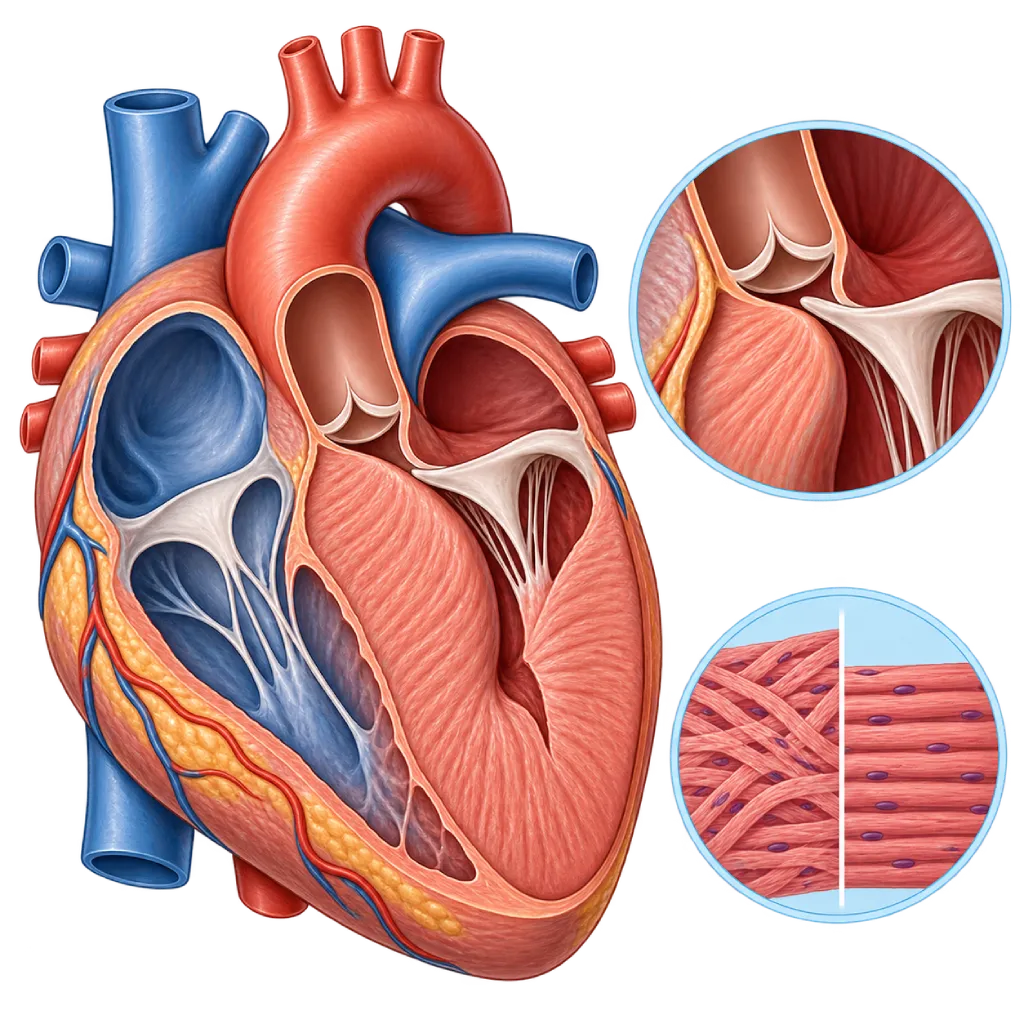
Hypertrophic cardiomyopathy is a heart muscle disease, usually inherited, that makes the wall of the left ventricle thicken without another clear cause, so the heart becomes stiff and the flow of blood out of the heart is sometimes obstructed.
SourcesSigns That Need Urgent Help
- Fainting, especially during or shortly after activity
- Very fast palpitations with severe dizziness or weakness
- Chest pain lasting more than a few minutes
- Severe shortness of breath at rest
- Weakness on one side of the body, an uneven face, or slurred speech
If these signs appear, go to the nearest emergency department right away or call Heart Attack Center 1500 258.
01 / Understanding the condition
About Hypertrophic Cardiomyopathy
Hypertrophic cardiomyopathy (HCM) is a heart muscle disease marked by thickening of the left ventricular wall. In adults, the diagnosis is usually made when the wall thickness reaches 15 millimeters or more, or 13 millimeters or more in close relatives of a patient, and is not adequately explained by hypertension, valve disease, or another load on the heart. HCM is estimated to affect about 1 in 500 adults, and many do not know they have it because they have no symptoms.
Causes and Inheritance
In many patients, HCM is caused by changes in the genes that control sarcomere proteins, the parts of the heart muscle that contract. Genes that are often involved include MYH7 and MYBPC3. The disease is usually inherited in an autosomal dominant pattern, so each child of a patient has about a 50 percent chance of inheriting the gene change. Thickening that resembles HCM can also be caused by other diseases that are treated differently, such as cardiac amyloidosis, covered on the Cardiac Amyloidosis page, and Fabry disease, covered on the Fabry Disease page.
Obstruction and Stiffness
In about two thirds of patients, thickening of the wall between the ventricles (the septum) and movement of the mitral valve block blood flow out of the left ventricle, either at rest or during activity. This is called obstructive HCM. The obstruction can increase with dehydration, after a large meal, or when standing up suddenly. Even without obstruction, the thick, stiff muscle makes it hard for the heart to fill with blood, causing shortness of breath and chest pain during activity.
Living with HCM
Data from experienced heart centers show that many people with HCM who are monitored regularly have a life expectancy close to that of the general population. Treatment focuses on relieving symptoms, controlling atrial fibrillation, and regularly assessing the risk of sudden cardiac arrest to decide whether an ICD is needed. Treatment options are also evolving, including cardiac myosin inhibitors for obstructive HCM that remains symptomatic. Checking close relatives is an important part of care, because thickening in gene carriers may only appear in adolescence or adulthood. HCM belongs to the family of cardiomyopathies covered on the Cardiomyopathy page.
02 / Understanding the condition
Symptoms to Recognize.
Common Symptoms
- Shortness of breath during activity
- Chest pain or pressure during activity or after a large meal
- Palpitations or an irregular heartbeat
- Dizziness or nearly fainting when standing up suddenly or after activity
- Tiring easily
- Fainting during or shortly after exercise
Symptoms in Children
Many children and teenagers with HCM have no symptoms and are only diagnosed because of a heart murmur or family screening.
- A heart murmur heard during a routine checkup
- Tiring easily or shortness of breath while playing or exercising
- Fainting or nearly fainting during exercise
- Chest pain or palpitations during activity
- In babies: fast breathing, difficulty feeding, or poor weight gain
03 / Understanding the condition
What Causes This Condition?
- Changes in sarcomere protein genes, such as MYH7 or MYBPC3, that are inherited in families
- A new gene change that appears for the first time in a person with no family history
- In some patients, a genetic cause cannot be found with currently available tests
- Other diseases that resemble HCM, such as cardiac amyloidosis, Fabry disease, or Danon disease
- In babies and young children, certain syndromes such as Noonan syndrome or inherited metabolic diseases
04 / Understanding the condition
Who Is at Higher Risk?
Genetic
Having a parent, sibling, or child with HCM. The disease is usually inherited in an autosomal dominant pattern, so close relatives are advised to be screened.
Age
HCM can be detected at any age, from infancy to old age. Thickening in gene carriers often only appears in adolescence or young adulthood, so family screening needs to be repeated regularly.
Medical
Hypertension, obesity, and sleep apnea do not cause HCM but can worsen symptoms. Dehydration and medicines that widen blood vessels can worsen obstruction.
Other
A family history of sudden cardiac arrest at a young age, unexplained fainting, and a very thick heart wall indicate a higher risk of rhythm disorders.
Groups at Higher Risk
- Family Members of People with HCM: Parents, siblings, and children are advised to have an ECG and echocardiography, as well as genetic testing if the patient's gene change has been found.
- Athletes and Active Teenagers: Screening before competitive sports can detect HCM that has not yet caused symptoms. Fainting during exercise needs to be checked before returning to training.
- Women Planning a Pregnancy: Most women with HCM can have a safe pregnancy, but it requires planning and monitoring with a cardiologist and an obstetrician.
05 / Understanding the condition
How Is It Diagnosed?
HCM is often first suspected because of a heart murmur, an abnormal ECG, or screening after a family member is diagnosed. Your doctor will ask about your symptoms and family history, especially fainting or sudden cardiac arrest at a young age. Echocardiography confirms the wall thickening and measures the obstruction to blood flow out of the left ventricle. If no obstruction is seen at rest, the measurement is repeated while you strain, stand, or exercise. Cardiac MRI helps measure the thickness in detail and assess scar tissue. Your doctor will also look for signs of diseases that resemble HCM, such as amyloidosis or Fabry disease. The results are entered into the ESC HCM Risk-SCD calculator to estimate the risk of sudden cardiac arrest within five years and decide whether an ICD is needed. Genetic testing is recommended to clarify the cause and guide family screening.
Echocardiography
Measures wall thickness, assesses mitral valve movement, and measures the obstruction to blood flow out of the left ventricle at rest, while straining, and while standing.
Cardiac MRI
Measures wall thickness in detail, especially in areas that are hard to see with echocardiography, and assesses the extent of scar tissue for risk assessment.
Electrocardiogram (ECG)
Often shows an abnormal electrical pattern, even before thickening is visible, and helps look for rhythm disorders.
Holter Monitoring
A rhythm recording over 24 to 48 hours to look for nonsustained ventricular tachycardia and atrial fibrillation as part of risk assessment.
Stress Echocardiography
Assesses obstruction that only appears during activity in patients who have symptoms but no obstruction at rest.
Genetic testing from a blood sample to look for the causative gene change, which helps screen family members and distinguish HCM from diseases that resemble it.
06 / Understanding the condition
Treatment Options.
Treatment is decided by a doctor after an assessment. The categories below can help you follow the conversation with your doctor.
Beta Blockers or Calcium Channel Blockers
First-line medicines that relieve symptoms and obstruction by slowing the heart rate and helping the muscle fill more easily. Only certain calcium channel blockers are used, such as verapamil or diltiazem. Your doctor decides the type and dose.
Cardiac Myosin Inhibitors
Medicines such as mavacamten reduce excessive contraction of the heart muscle in obstructive HCM that remains symptomatic, with regular echocardiography monitoring.
Septal Reduction Therapy
Septal myectomy (surgery to remove part of the septal muscle) or alcohol septal ablation (through a catheter) is considered when obstruction is severe and symptoms persist despite treatment.
Implantable Cardioverter Defibrillator
A device that detects and stops dangerous ventricular rhythms, implanted when risk assessment shows a high likelihood of sudden cardiac arrest.
Atrial Fibrillation Treatment
Blood thinners to prevent stroke, plus rhythm control with medicines or cardiac ablation as appropriate.
Managing Activity and Fluids
Drink enough, avoid dehydration and overeating, and exercise as assessed by your doctor. Some medicines, such as those that widen blood vessels, can worsen obstruction, so your doctor reviews their use.
07 / Understanding the condition
Complications to Watch For.
Atrial Fibrillation
An enlarged left atrium makes atrial fibrillation more likely, which can worsen shortness of breath and increase the risk of stroke, so blood thinners are usually recommended.
Sudden Cardiac Arrest
In a small number of patients, a very fast ventricular rhythm can stop the heart from pumping. Regular risk assessment helps determine who needs an ICD.
Heart Failure
The stiff muscle makes it hard for the heart to fill. In a small number of patients, the heart muscle gradually thins and its pumping weakens, which is called end-stage HCM.
Fainting Due to Obstruction
An obstruction that increases during activity or dehydration can lower blood pressure and blood flow to the brain, causing fainting.
Stroke
Blood clots that form in the atrium during atrial fibrillation can travel to the brain. This risk can be reduced with blood thinners.
08 / Understanding the condition
What Can You Do?
- Have family screening if a close relative has HCM, even if you feel healthy
- Drink enough and avoid dehydration, especially in hot weather or during exercise
- Eat moderate portions if symptoms often appear after meals
- Discuss the type and intensity of exercise with your doctor before you start training
- Tell every doctor that you have HCM before you are given a new medicine or anesthesia
- Limit alcohol, because it can trigger atrial fibrillation and worsen obstruction
- Have regular checkups to reassess your risk, usually every one to two years
09 / Understanding the condition
When Should You See a Doctor?
See a cardiologist if you have any of the following symptoms, or if a close family member has been diagnosed with HCM. Fainting during exercise needs to be checked before you return to exercise. If fainting comes with chest pain or a very fast heartbeat, go to the emergency room right away.
- Fainting or nearly fainting, especially during or after activity
- Chest pain or shortness of breath during activity
- Palpitations or an irregular heartbeat
- Your doctor has found a heart murmur or an abnormal ECG
- A close relative with HCM or sudden cardiac arrest before age 50
- Planning a pregnancy or planning to start competitive sports
Don't Wait in an Emergency.
If symptoms are severe or come on suddenly, go to the nearest emergency department right away or call Heart Attack Center 1500 258, rather than waiting for an appointment.
10 / Common questions
Questions You May Have.
Frequently asked questions about hypertrophic cardiomyopathy.
Is heart muscle thickening from exercise the same as HCM?
No. Intense training over a long period can make an athlete's heart wall slightly thicker as a normal adaptation, covered on the Athlete's Heart page. In an athlete's heart, the heart chambers usually enlarge as well, filling remains good, and the thickening can decrease if training is paused. If the results are unclear, doctors use echocardiography, cardiac MRI, exercise testing, and genetic testing to tell them apart.
Can HCM be passed on to your children?
HCM is usually inherited in an autosomal dominant pattern, so each child has about a 50 percent chance of inheriting the gene change. Not every gene carrier will develop thickening or symptoms. If your gene change is already known, your children can have targeted genetic testing. If it is not known, children usually have regular ECGs and echocardiography from childhood into adulthood.
Can people with HCM exercise?
Yes. The 2023 ESC guidelines recommend light to moderate exercise for people with HCM because it benefits fitness and health. High-intensity or competitive sports may be considered for some low-risk patients after a thorough assessment by a doctor. Avoid dehydration, do not train when you are ill, and stop exercising if you feel dizzy or have chest pain or palpitations.
What is an ICD and who needs one?
An ICD is a small device implanted under the skin of the chest to detect dangerous ventricular rhythms and stop them with rapid pacing or an electric shock. In HCM, an ICD is recommended for patients who have had a cardiac arrest, and is considered for patients with a high estimated five-year risk based on the risk calculator and other findings. The decision is made together with you after discussing the benefits and risks.
Can obstruction be treated without surgery?
In many patients, beta blockers or certain calcium channel blockers are enough to relieve symptoms. Cardiac myosin inhibitors can reduce obstruction in patients who remain symptomatic. If obstruction remains severe, the option without open surgery is alcohol septal ablation through a catheter, while septal myectomy is done through surgery. The choice is made by an experienced heart team based on the shape of your septum and your condition.
Can women with HCM get pregnant?
Most women with HCM can go through pregnancy and childbirth well. Pregnancy should be planned, with a checkup before pregnancy and monitoring together with a cardiologist and an obstetrician. Some medicines need to be reviewed by your doctor before or during pregnancy. Genetic counseling also helps you understand the chance of your child inheriting HCM.
Sources and Medical Review
Translated from the Indonesian edition medically reviewed by dr. BRM Ario S. Kuncoro, Sp.JP(K).
Sources as cited in the Indonesian edition.
- Arbelo E, Protonotarios A, Gimeno JR, Arbustini E, Barriales-Villa R, Basso C, et al. 2023 ESC Guidelines for the management of cardiomyopathies. Eur Heart J. 2023;44(37):3503-626.
- Ommen SR, Ho CY, Asif IM, Balaji S, Burke MA, Day SM, et al. 2024 AHA/ACC/AMSSM/HRS/PACES/SCMR Guideline for the Management of Hypertrophic Cardiomyopathy: A Report of the American Heart Association/American College of Cardiology Joint Committee on Clinical Practice Guidelines. Circulation. 2024;149(23):e1239-311.
- Maron BJ, Desai MY, Nishimura RA, Spirito P, Rakowski H, Towbin JA, et al. Diagnosis and Evaluation of Hypertrophic Cardiomyopathy: JACC State-of-the-Art Review. J Am Coll Cardiol. 2022;79(4):372-89.
- Olivotto I, Oreziak A, Barriales-Villa R, Abraham TP, Masri A, Garcia-Pavia P, et al. Mavacamten for treatment of symptomatic obstructive hypertrophic cardiomyopathy (EXPLORER-HCM): a randomised, double-blind, placebo-controlled, phase 3 trial. Lancet. 2020;396(10253):759-69.
- Pelliccia A, Sharma S, Gati S, Bäck M, Börjesson M, Caselli S, et al. 2020 ESC Guidelines on sports cardiology and exercise in patients with cardiovascular disease. Eur Heart J. 2021;42(1):17-96.
- Marian AJ, Braunwald E. Hypertrophic Cardiomyopathy: Genetics, Pathogenesis, Clinical Manifestations, Diagnosis, and Therapy. Circ Res. 2017;121(7):749-70.
Doctors Who Treat This Condition

dr. BRM Ario S. Kuncoro, Sp.JP(K)
Echocardiography & Cardiovascular Imaging
Cardiovascular Diagnostic Center +2 centers
Clinical focusAdvanced and 3D Echocardiography · Transesophageal Echocardiography
View Profile
Dr. dr. Dicky A. Hanafy, Sp.JP(K)
Arrhythmia and Electrophysiology
Arrhythmia and Device Center +1 center
Clinical focusElectrophysiology and Arrhythmia Ablation · Pacemaker and ICD Implantation
View Profile
Dr. med. dr. Denio A. Ridjab, Sp.JP(K)
Interventional Cardiology
Coronary Intervention Procedures +2 centers
Clinical focusInterventional Cardiology · Coronary Artery Disease
View Profile