
Quick answer
What Is Angina Pectoris?
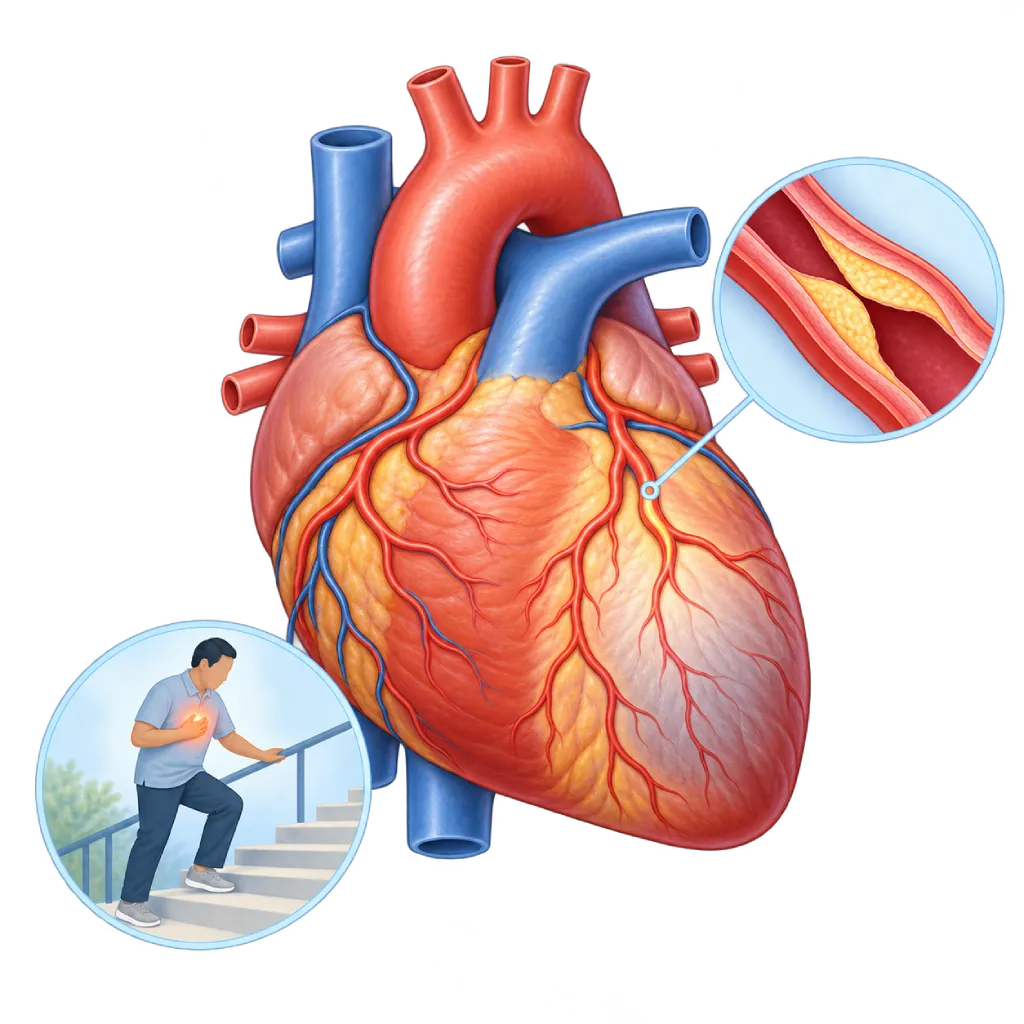
Angina pectoris is chest pain or discomfort that occurs when the heart muscle does not get enough oxygen-rich blood, usually because the coronary arteries have narrowed. Angina is a symptom, not a disease in itself, so a doctor needs to check its cause.
SourcesSigns That Need Urgent Help
- Chest pain that does not ease after a few minutes of rest
- New, severe chest pain, or angina that is becoming more frequent and more severe
- Chest pain at rest or chest pain that wakes you from sleep
- Chest pain with cold sweat, nausea, or severe shortness of breath
- Fainting, nearly fainting, or a very irregular heartbeat
If these signs appear, go to the nearest emergency department right away or call Heart Attack Center 1500 258.
01 / Understanding the condition
About Angina Pectoris
Angina pectoris is pain, pressure, or discomfort in the chest that occurs when the heart muscle does not get enough oxygen-rich blood. This shortage of blood flow is called ischemia. Angina is not a disease in itself, but a sign of a problem with the heart's blood vessels. A common cause is coronary artery disease, covered on the Coronary Artery Disease page.
How Angina Happens
The heart muscle receives blood from the coronary arteries, the vessels that wrap around the surface of the heart. When you walk quickly, climb stairs, or feel strong emotion, your heart works harder and needs more oxygen. If the coronary arteries are narrowed by fatty plaque (atherosclerosis), tighten briefly because of a spasm, or the heart's small blood vessels cannot widen properly, the blood supply cannot keep up with that demand. The result is pain. When the heart's workload eases or blood flow returns, the pain usually subsides within a few minutes.
Types of Angina
Doctors classify angina by its pattern and cause. Stable angina appears in a predictable pattern, usually during activity, and eases with rest. Unstable angina is chest pain that is new, becoming more frequent or more severe, or occurring at rest. This condition is part of acute coronary syndrome and needs urgent care. Variant or vasospastic angina is caused by spasm of the coronary arteries and often occurs at rest at night or in the early morning. Microvascular angina is caused by a problem in the very small blood vessels of the heart muscle, so the large coronary arteries may look normal on testing. Each type is covered in more detail on its own page.
Symptoms Are Not Always Pain
Some people, especially women, older adults, and people with diabetes, feel angina as shortness of breath, unusual tiredness, nausea, or discomfort in the upper abdomen. These symptoms are easily mistaken for catching a chill or a stomach problem, when the source may in fact be the heart.
Why Angina Needs to Be Checked
Angina is a signal that the heart is not getting enough blood. With the right tests, your doctor can look for the cause, assess your risk of a heart attack, and plan treatment that relieves symptoms while protecting your blood vessels. Many people with angina can keep working and living an active life once treatment is underway.
02 / Understanding the condition
Types and Related Conditions
The following conditions belong to the Angina Pectoris group. Open each one for a full explanation.
03 / Understanding the condition
Symptoms to Recognize.
Common Symptoms
- Pain, pressure, heaviness, or a squeezing feeling in the chest
- Pain spreading to the arm, shoulder, neck, jaw, or back
- Symptoms that come on with physical activity or emotion and ease with rest
- Symptoms that last a few minutes, not just a few seconds
- Shortness of breath, especially during activity
- Discomfort in the upper abdomen that feels like a stomach ache
- Cold sweat or nausea when the pain appears
Symptoms in Adult Women
Chest pain is still the main symptom, but women more often have the following accompanying symptoms.
- Shortness of breath that comes with or replaces chest pain
- Nausea or discomfort in the upper abdomen
- Unusual tiredness during light activity
- Pain in the upper back, neck, or jaw
- Chest pain that is more often triggered by emotional stress
Symptoms in Older Adults
In older age, angina is sometimes not felt as chest pain.
- Shortness of breath during light activity
- Tiring quickly or a reduced ability to be active
- Vague discomfort in the chest or upper abdomen
- Dizziness or feeling faint during activity
04 / Understanding the condition
What Causes This Condition?
- Narrowing of the coronary arteries by fatty plaque (atherosclerosis), covered on the Atherosclerosis page.
- A plaque that ruptures and triggers a blood clot, suddenly reducing blood flow
- Spasm of the coronary arteries that temporarily narrows the vessel
- A problem with the heart's small blood vessels, which cannot widen as needed
- Increased oxygen demand of the heart, for example with thickened heart muscle or a narrowed aortic valve
- Reduced oxygen supply, for example with severe anemia or a very fast heart rate
05 / Understanding the condition
Who Is at Higher Risk?
Lifestyle
Smoking, inactivity, a diet high in saturated fat and salt, and excess weight speed up plaque buildup in the coronary arteries.
Medical
High blood pressure, high LDL cholesterol, diabetes, and chronic kidney disease damage the inner lining of blood vessels and raise the risk of angina.
Genetic
Early coronary artery disease in an immediate family member, meaning in a man before age 55 or a woman before age 65, as well as inherited high cholesterol, raises the risk.
Age
Risk increases with age, especially in men over 45 and in women after menopause.
Other
Long-term stress, pauses in breathing during sleep (sleep apnea), air pollution, and chronic inflammatory diseases such as lupus are also linked to a higher risk.
Groups at Higher Risk
- People with Diabetes: Diabetes speeds up atherosclerosis and can dull the sense of pain, so angina is sometimes felt only as shortness of breath or tiredness.
- Active and Passive Smokers: Substances in cigarette smoke damage the inner lining of blood vessels, speed up plaque formation, and can trigger coronary artery spasm.
- People with Hypertension and High Cholesterol: Years of high blood pressure and high LDL cholesterol damage the walls of the coronary arteries and speed up their narrowing.
- Postmenopausal Women: After menopause, the risk of coronary artery disease increases, and angina caused by problems in the small blood vessels is found more often in women.
06 / Understanding the condition
How Is It Diagnosed?
Your doctor starts by asking about your symptoms: what they feel like, where they are, what triggers them, how long they last, and what relieves them. The doctor then checks your blood pressure, pulse, heart, and lungs. An ECG and blood tests are done to look for signs of ischemia, heart muscle damage, and risk factors.
If the pain is happening now or has just happened, repeated ECGs and a troponin test in the emergency room help tell unstable angina apart from a heart attack. For stable symptoms, the doctor chooses further tests based on how likely coronary disease is. CT coronary angiography can show plaque and narrowing. Stress testing with imaging, such as stress echocardiography, myocardial perfusion imaging, or cardiac MRI, shows whether the heart muscle lacks blood when it works hard.
Coronary angiography with a catheter is done if test results show high risk or symptoms remain severe despite treatment. If the large arteries look normal but the symptoms are real, the doctor may assess the function of the small blood vessels and the tendency to spasm.
Electrocardiogram (ECG)
Records the heart's electrical activity at rest or during pain to look for signs of ischemia, a heart attack, or a rhythm disorder.
Cardiac Troponin Test
Used for new or ongoing chest pain to confirm or rule out heart muscle damage.
CT Coronary Angiography
Shows plaque and narrowing in the coronary arteries without a catheter, useful for stable symptoms when the likelihood of coronary disease is low to moderate.
Stress Echocardiography
Assesses heart wall motion under stress to see whether any part of the heart muscle lacks blood.
Coronary Angiography
Takes images of the coronary arteries using a catheter and contrast dye to see the location and severity of narrowing, and to decide whether a procedure is needed.
Laboratory Tests
Blood fats, blood sugar or HbA1c, kidney function, and hemoglobin to assess risk factors and other causes.
07 / Understanding the condition
Treatment Options.
Treatment is decided by a doctor after an assessment. The categories below can help you follow the conversation with your doctor.
Lifestyle Changes
Quitting smoking, a heart-healthy diet, regular physical activity as advised by your doctor, and maintaining a healthy weight are the foundation of all angina treatment.
Medicines to Relieve and Prevent Angina
Fast-acting nitrates relieve attacks. Beta blockers, calcium channel blockers, or long-acting nitrates prevent attacks. Your doctor decides the type and dose based on the type of angina.
Medicines That Protect the Blood Vessels
Antiplatelets such as aspirin and cholesterol-lowering statins reduce the risk of a heart attack in angina caused by coronary disease.
Risk Factor Control
Blood pressure, LDL cholesterol, and blood sugar are controlled to the targets set by your doctor, with regular follow-up checks.
Coronary Revascularization
Stent placement through a catheter or bypass surgery is considered if the narrowing is severe, the risk is high, or symptoms remain troublesome despite treatment.
Urgent Hospital Treatment
Unstable angina is treated in the hospital with medicines that prevent clots and, in many patients, coronary angiography. Covered on the Unstable Angina page.
08 / Understanding the condition
Complications to Watch For.
Heart Attack
A ruptured plaque can trigger a clot that completely blocks a coronary artery, damaging part of the heart muscle. Covered on the Myocardial Infarction / Heart Attack page.
Heart Rhythm Disorders
Heart muscle that lacks blood can trigger irregular rhythms, ranging from mild ones to those that need urgent treatment.
Heart Failure
Repeated ischemia or scarring from a heart attack can weaken the heart's pumping, causing shortness of breath and swelling in the legs.
Activity Limitations
Frequent pain leads people to limit work, exercise, and social activities, and can trigger anxiety.
09 / Understanding the condition
What Can You Do?
- Quit smoking and avoid other people's cigarette smoke
- Stay active, for example brisk walking for about 150 minutes per week, as advised by your doctor
- Choose a diet rich in vegetables, fruit, whole grains, fish, and nuts; limit salt and saturated fat
- Keep your weight and waist size within a healthy range
- Have your blood pressure, cholesterol, and blood sugar checked regularly
- Take your heart medicines as prescribed and do not stop them without talking to your doctor
- Manage stress and get enough sleep
10 / Understanding the condition
When Should You See a Doctor?
See a cardiologist if you have ever felt pain or discomfort in your chest, even if it went away on its own. Getting checked early gives a chance to find the cause and lower the risk of a heart attack. If chest pain is happening now and does not ease with rest, or your angina pattern changes to become more frequent and more severe, do not wait for your next appointment: go to a nearby emergency room right away and do not drive yourself.
- Pain, pressure, or heaviness in the chest during activity or emotion.
- Shortness of breath or unusual tiredness during activities that used to feel easy.
- Discomfort in the upper abdomen during activity that does not improve with stomach medicine.
- You have diabetes, hypertension, high cholesterol, or a family history of heart disease and are starting to feel chest symptoms.
Don't Wait in an Emergency.
If symptoms are severe or come on suddenly, go to the nearest emergency department right away or call Heart Attack Center 1500 258, rather than waiting for an appointment.
11 / Common questions
Questions You May Have.
Frequently asked questions about angina pectoris.
Is angina the same as a heart attack?
No, they are different. In angina, blood flow to the heart muscle is reduced temporarily without damaging the heart muscle. In a heart attack, an artery stays blocked long enough that part of the heart muscle is damaged. At home, however, the two are hard to tell apart. Chest pain that does not ease with rest, or severe chest pain you are feeling for the first time, needs to be checked in the emergency room right away.
Is angin duduk the same as angina pectoris?
In everyday Indonesian, the folk term angin duduk is often used for chest pain that is actually angina or a heart attack. The symptom is not caused by wind inside the body, but by reduced blood flow to the heart muscle. That is why chest pain thought to be a chill (masuk angin) should be checked by a doctor, not just treated with coin rubbing (kerokan) or remedies for a chill.
How can you tell angina from stomach pain or muscle pain?
Angina usually feels like pressure or heaviness, is triggered by activity or emotion, lasts a few minutes, and eases with rest. Muscle pain is usually sharp and gets worse when pressed or when you move. Stomach pain is often related to eating. These features often overlap, so your doctor still needs an ECG and other tests to confirm the source.
Can people with angina exercise?
Yes, and it is generally recommended once your doctor has assessed your condition. Regular exercise at a suitable intensity helps the heart work more efficiently and improves risk factors. A cardiac rehabilitation program can help determine a safe amount of exercise. Stop exercising and rest if chest pain appears, then tell your doctor at your next checkup.
Can angina be cured?
The underlying cause, such as coronary artery disease, usually needs long-term management. However, angina symptoms can be controlled, and many people have attacks only rarely, or not at all, after receiving medicines, lifestyle changes, and, if needed, a procedure to open the blood vessels. Regular checkups help your doctor adjust treatment if your symptoms change.
What should you do when an angina attack occurs?
Stop what you are doing, then sit or lie down comfortably. If your doctor has prescribed a fast-acting nitrate, use it as instructed. If the pain does not ease within a few minutes, feels more severe than usual, or this is your first chest pain, call emergency services right away or ask someone to take you to a nearby emergency room.
Sources and Medical Review
Translated from the Indonesian edition medically reviewed by Dr. dr. Jajang Sinardja, Sp.JP(K).
Sources as cited in the Indonesian edition.
- Vrints C, Andreotti F, Koskinas KC, Rossello X, Adamo M, Ainslie J, et al. 2024 ESC Guidelines for the management of chronic coronary syndromes. Eur Heart J. 2024;45(36):3415-537.
- Byrne RA, Rossello X, Coughlan JJ, Barbato E, Berry C, Chieffo A, et al. 2023 ESC Guidelines for the management of acute coronary syndromes. Eur Heart J. 2023;44(38):3720-826.
- Gulati M, Levy PD, Mukherjee D, Amsterdam E, Bhatt DL, Birtcher KK, et al. 2021 AHA/ACC/ASE/CHEST/SAEM/SCCT/SCMR Guideline for the Evaluation and Diagnosis of Chest Pain: A Report of the American College of Cardiology/American Heart Association Joint Committee on Clinical Practice Guidelines. Circulation. 2021;144(22):e368-454.
- Virani SS, Newby LK, Arnold SV, Bittner V, Brewer LC, Demeter SH, et al. 2023 AHA/ACC/ACCP/ASPC/NLA/PCNA Guideline for the Management of Patients With Chronic Coronary Disease: A Report of the American Heart Association/American College of Cardiology Joint Committee on Clinical Practice Guidelines. Circulation. 2023;148(9):e9-119.
- Kunadian V, Chieffo A, Camici PG, Berry C, Escaned J, Maas AHEM, et al. An EAPCI Expert Consensus Document on Ischaemia with Non-Obstructive Coronary Arteries in Collaboration with European Society of Cardiology Working Group on Coronary Pathophysiology & Microcirculation Endorsed by Coronary Vasomotor Disorders International Study Group. Eur Heart J. 2020;41(37):3504-20.
- Visseren FLJ, Mach F, Smulders YM, Carballo D, Koskinas KC, Back M, et al. 2021 ESC Guidelines on cardiovascular disease prevention in clinical practice. Eur Heart J. 2021;42(34):3227-337.
Doctors Who Treat This Condition

Dr. dr. Jajang Sinardja, Sp.JP(K)
Interventional Cardiology
Coronary Intervention Procedures
Clinical focusAcute Coronary Syndrome · Primary Coronary Intervention
View Profile
dr. Puti S. Saus, Sp.JP(K)
Interventional Cardiology
Coronary Intervention Procedures
Clinical focusAcute Coronary Syndrome · Primary Coronary Intervention
View Profile
Dr. med. dr. Denio A. Ridjab, Sp.JP(K)
Interventional Cardiology
Coronary Intervention Procedures +2 centers
Clinical focusInterventional Cardiology · Coronary Artery Disease
View Profile